
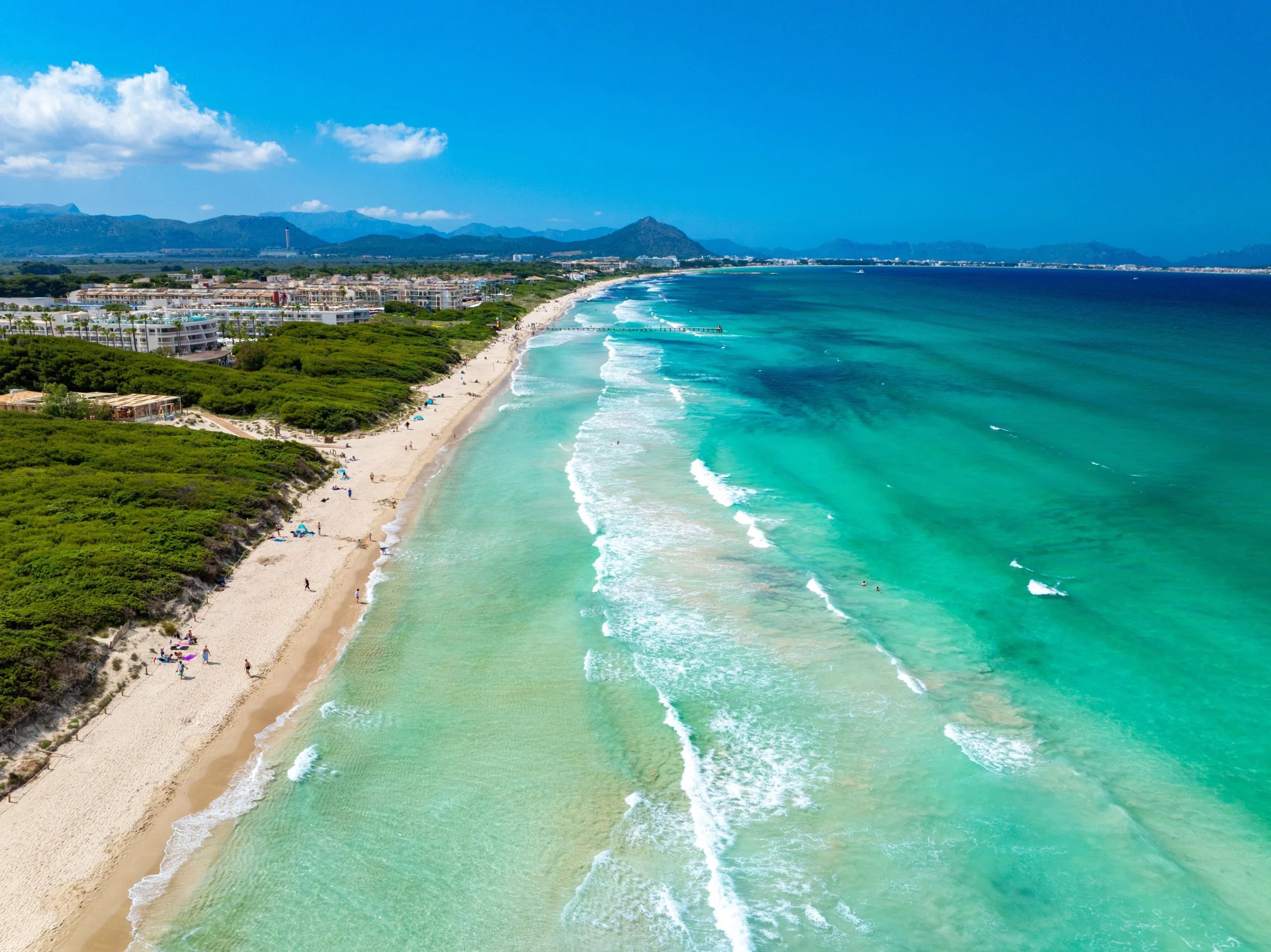
Choosing between Mallorca’s three premier luxury addresses isn’t about finding the ‘best’ location. It’s about matching a property to how you actually live. Palma offers urban sophistication with year-round professional infrastructure. Port d’Andratx delivers marina lifestyle for yacht owners and golf enthusiasts. Deià provides UNESCO-protected mountain seclusion for those who’ve traded ambition for authenticity.
This analysis examines the practical realities of each location, from school commute times to rental licensing constraints, giving you the intelligence to make a decision you won’t regret in three years’ time.
On Spanish income to EUR 600K
Year of arrival + 5 following
Official sources cited
Dividends, gains, rentals abroad
Last updated: 10 June 2026
By: Alexander Thornbury
Contents
- Which location suits urban professionals versus rural lifestyle seekers?
- How do property prices compare across the three locations?
- What infrastructure differences affect daily living?
- Which location offers the strongest investment returns?
- How do buyer demographics differ between locations?
- What rental income potential exists in each area?
- Which location provides the best international school access?
- How do lifestyle amenities compare?
- What are the regulatory and planning constraints?
- Which location offers the best long-term value proposition?
Which location suits urban professionals versus rural lifestyle seekers?
The three locations represent distinct lifestyle propositions. Palma functions as a working capital with urban density and services. Andratx offers coastal exclusivity with marina culture. Deià provides mountain seclusion with artistic heritage. Your location choice reflects lifestyle priorities more than investment optimisation.
Palma suits professionals maintaining business operations. The city has private banking offices, coworking spaces, and extensive flight connections from Palma de Mallorca Airport. A remote-working technology entrepreneur can video conference with London clients at 9am, lunch at a Michelin restaurant by 1pm, and sail by 5pm. This integration of work and Mediterranean lifestyle drives Palma’s growing appeal.
The urban density provides cultural infrastructure absent elsewhere on the island. Multiple Michelin-starred restaurants (including Marc Fosh, Zaranda, DINS Santi Taura, and Adrián Quetglas), contemporary art galleries, the Auditorium, and private members’ clubs create social environments for professional networks. You’re not isolated in a villa. You’re participating in an urban professional community.
Andratx (specifically Port d’Andratx) targets yacht-owning wealth and golf-focused retirees. The Club de Vela marina accommodates approximately 475 berths for vessels up to 36 metres, with additional municipal moorings bringing total capacity to around 700 berths. Marina culture dominates social life. Yacht club dinners, sailing events, and waterfront dining.
The area lacks Palma’s professional infrastructure. No coworking spaces, limited private banking (most residents bank in Palma), and fewer direct business services. It’s a residential resort rather than an operational base. Buyers here are typically post-career or operating businesses remotely without requiring local professional services.
Deià serves artists, writers, and independently wealthy individuals seeking cultural authenticity over convenience. The village of approximately 700 residents has no marina, no golf course, no private banking, and limited commercial services. What it offers: Robert Graves House museum, small art galleries, intimate restaurants, and a community of creative professionals who’ve monetised successfully.
The appeal is seclusion with cultural credibility. Buying in Deià signals priorities beyond wealth display. You’re associating with artistic heritage rather than marina status. This positioning attracts a specific buyer: culturally sophisticated, independently wealthy, valuing authenticity over luxury amenities.
Lifestyle Positioning Comparison
| Factor | Palma | Andratx | Deià |
| Primary Appeal | Urban Mediterranean lifestyle | Marina/golf resort living | Cultural authenticity, seclusion |
| Ideal Buyer Profile | Remote-working professionals 35-55 | Yacht owners, retirees 55-70 | Artists, writers, tech founders 40-60 |
| Work Infrastructure | Excellent (coworking, banking, services) | Limited (residential focus) | Minimal (isolation priority) |
| Cultural Amenities | Michelin dining, galleries, Auditorium | Marina clubs, golf, waterfront dining | Village restaurants, galleries, hiking |
| Social Environment | Professional networks, expat community | Marina/yacht club culture | Artistic community, privacy-focused |
| Daily Convenience | High (urban services walking distance) | Medium (car required for most errands) | Low (30min drive to services) |
| Privacy Level | Low (urban density) | Medium (resort community) | High (rural mountain setting) |
| Seasonal Variation | Year-round activity | Quiet Nov-Mar, busy Apr-Oct | Very quiet Nov-Apr, moderate May-Oct |
What defines the Palma professional lifestyle?
Palma attracts working professionals who need Mediterranean lifestyle without sacrificing business functionality. The city offers reliable fibre broadband, multiple coworking options, and direct flights to major European business hubs. Most importantly, it provides the year-round social infrastructure that seasonal resort locations simply cannot match.
Why do yacht owners choose Port d’Andratx over Palma?
Port d’Andratx offers a more intimate marina environment than Palma’s larger Club de Mar. The village atmosphere, combined with immediate access to southwest Mallorca’s sailing waters, appeals to owners who prioritise maritime lifestyle over urban convenience. Property prices also reflect this positioning, with waterfront villas commanding substantial premiums.
How do property prices compare across the three locations?
Property pricing reflects both location premiums and property characteristics. Deià commands higher per-square-metre rates but offers smaller properties. Andratx waterfront reaches the highest absolute prices for prime positions. Palma urban properties trade at lower per-square-metre rates but with larger property sizes available.
These per-square-metre figures can mislead without context. A 300sqm Deià finca at €10,000/sqm costs €3M. A 600sqm Andratx villa at €8,000/sqm costs €4.8M. A 250sqm Palma penthouse at €4,500/sqm costs €1.125M. The total investment varies more by property size than location premium.
Deià pricing reflects scarcity and cultural positioning. UNESCO World Heritage designation (Serra de Tramuntana, inscribed 2011) restricts new development. Existing properties trade at premiums because supply cannot increase. The Robert Graves association creates intangible value. Buyers pay for cultural credentials alongside physical property.
Typical Deià transactions involve stone fincas on 2,000-8,000sqm plots. Properties of 300-500sqm sell for €4M-€8M. Exceptional properties with sea views and extensive land reach €10M-€15M. These aren’t modern luxury villas. They’re restored traditional structures with heritage character.
Andratx pricing stratifies by marina proximity. Waterfront properties with direct sea access command the highest per-square-metre rates. Hillside villas with marina views trade at intermediate levels. Inland Andratx properties (away from coast) price considerably lower. The marina creates a pricing gradient. Distance from water directly impacts values.
Typical Andratx luxury transactions involve 400-800sqm villas on 1,500-4,000sqm plots. Waterfront properties sell for €5M-€12M. Hillside villas with views trade at €3M-€7M. Modern new-builds command premiums over older properties requiring updates.
Palma pricing divides between historic Old Town and residential districts. Old Town penthouses in restored palaces can reach premium per-square-metre rates but rarely exceed 300sqm. Residential areas (Santa Catalina, Portixol, Son Vida) trade at more moderate rates with larger properties available.
Son Vida (Palma’s prestigious hillside district) functions as a distinct micro-market with luxury villas at elevated prices. These properties compete with Andratx pricing but offer golf course access and international school proximity versus marina positioning.
Price Comparison by Property Type
| Property Type | Palma | Andratx | Deià |
| Apartment (200sqm) | €780K-€1.8M | €1.4M-€3M (waterfront) | N/A (limited apartments) |
| Villa (400sqm) | €1.5M-€3.5M | €2.4M-€6M | €3.5M-€5M |
| Luxury Villa (600sqm) | €2.3M-€5.5M | €3.6M-€9M | Rare availability |
| Finca with Land | €2M-€5M (countryside) | €3M-€8M (rural Andratx) | €4M-€15M (village/views) |
| Penthouse (250sqm) | €1M-€2.25M | Limited availability | N/A |
| Entry-Level Luxury | €800K (200sqm apt) | €2M (small villa) | €3.5M (modest finca) |
| Typical Transaction | €1.5M-€3M | €3M-€6M | €4M-€8M |
What infrastructure differences affect daily living?
Infrastructure determines whether a location functions as a primary residence or seasonal retreat. Palma offers comprehensive urban services. Andratx provides resort infrastructure. Deià requires 30-minute drives for basic services.
Healthcare access varies dramatically. Palma has multiple private hospitals (Clínica Juaneda, Clínica Palmaplanas, Hospital Quirónsalud), numerous specialist medical practices, and 24-hour emergency services. English and German-speaking doctors are readily available. International health insurance is accepted universally.
Andratx has one medical centre (Centro de Salud Andratx) for basic services. Serious medical issues require 35-minute drives to Palma. The area attracts older buyers (55-70), making healthcare access a material consideration. Many Andratx residents maintain Palma medical relationships rather than using local services.
Deià has minimal healthcare. A small medical post for basic services only. Residents drive 30 minutes to Sóller for general practice, 45 minutes to Palma for specialists. This infrastructure reality restricts Deià to healthy buyers planning occasional rather than frequent medical needs.
International schools concentrate around Palma. Bellver International College (Son Sardina), Baleares International College (Marratxí and Sant Agustí campuses), and Queen’s College (Cala Major) provide British curriculum education. All are within 15-25 minutes of Palma city centre.
Andratx families with school-age children face 45-60 minute daily drives to international schools. This commute proves challenging for most families, restricting Andratx to retirees or buyers using local Spanish schools. Some Andratx residents maintain Palma apartments for weekday use, returning to Andratx properties at weekends.
Deià families face similar school access challenges (45-60 minute drives to Palma schools). The village has a small local primary school but no international options. Families prioritising education rarely choose Deià.
Infrastructure Comparison
| Infrastructure | Palma | Andratx | Deià |
| Private Hospitals | 3+ facilities, specialist care | None (35min to Palma) | None (45min to Palma) |
| International Schools | Multiple schools, 15-25min access | 45-60min commute to Palma | 45-60min commute to Palma |
| Supermarkets | Multiple (El Corte Inglés, Carrefour) | 2-3 standard supermarkets | 1 small shop |
| Private Banking | Multiple UHNWI banking offices | Standard retail banks only | None |
| Michelin Restaurants | Multiple starred restaurants | None | None |
| Coworking Spaces | Multiple facilities | None | None |
| Marina Berths | Club de Mar (limited) | ~700 berths (Club de Vela + municipal) | None |
| Golf Courses | Son Vida, Son Muntaner | Andratx Golf Club nearby | None (30min+ to courses) |
| Airport Distance | 8km (15min) | 35km (40-50min) | 40km (50-60min) |
| Public Transport | Extensive bus network | Limited bus service | Very limited bus service |
Which location offers the strongest investment returns?
Investment returns combine capital appreciation with rental income. Palma offers higher rental yields with strong liquidity. Andratx provides appreciation potential but faces rental licensing constraints. Deià commands prestige pricing but offers minimal rental opportunity.
Palma’s investment case rests on rental demand from remote-working professionals. A 200sqm Old Town penthouse can generate €3,000-€4,500 monthly (€36,000-€54,000 annually) from professionals on 6-12 month assignments. That represents solid gross yields on purchase prices of €1M-€1.5M.
The occupancy reliability proves crucial. Remote workers need year-round accommodation, creating consistent demand. Tourist seasonal patterns don’t affect Palma long-term rentals the way they impact coastal resort areas.
Andratx rental demand comes primarily from wealthy tourists seeking 2-4 week holiday lets. Weekly rental rates can reach €8,000-€15,000 for luxury villas during high season (June-September). However, achieving legal short-term rental income requires a tourism licence (ETV).
The Balearic government imposed a moratorium on new tourism licences in 2022, which remains in effect until at least 2026. Properties without existing licences can only offer long-term lets (12+ months) at substantially lower yields. Buyers must verify licence status before purchase.
Deià’s rental market barely exists for luxury properties. Most owners occupy personally or leave properties vacant. The few properties offered for rent target cultural tourists paying premium weekly rates for authentic Tramuntana experience. Annual income remains modest relative to property values.
Capital appreciation patterns differ by location. Palma shows steady appreciation driven by urban professional demand. Andratx experiences cyclical appreciation tied to yacht ownership trends and wealthy retiree demographics. Deià appreciation depends on cultural positioning maintaining prestige.
Liquidity considerations matter for investors planning potential exits. Palma properties typically sell faster due to broader buyer pools. Andratx takes longer. Deià properties can require extended marketing periods due to narrow buyer demographics.
Investment Returns Comparison
| Metric | Palma | Andratx (Licensed) | Andratx (Unlicensed) | Deià |
| Annual Appreciation (Est.) | 5-8% | 5-8% | 5-8% | 4-7% |
| Gross Rental Yield | 3-4.5% | 2.5-3.5% | 0.7-1.4% | 1-2% |
| Total Return (Est.) | 8-12% | 7.5-11% | 5.5-9% | 5-9% |
| Occupancy Rate (rental) | 80-90% | 55-70% | 100% (long-term) | 40-50% |
| Time to Sale | 6-9 months | 9-12 months | 9-12 months | 12-18 months |
| Buyer Pool Size | Large (diverse) | Medium (yacht/resort focus) | Medium | Small (cultural positioning) |
| Rental Licence Availability | Restricted | Very limited (frozen 2022) | N/A | Very limited |
| Investment Complexity | Low | Medium-High (licence issues) | Low | Medium |
What is the tourism licence situation in Mallorca?
The Balearic government introduced a moratorium on new ETV (tourism licence) issuance in early 2022, expected to remain in effect until at least 2026. Properties with existing licences can continue short-term rentals. Unlicensed properties can only offer long-term lets of one month or more. Enforcement has increased, with fines for illegal short-term rentals reaching €40,000+.
How do buyer demographics differ between locations?
Buyer demographics reveal how each location serves different wealth segments and life stages. Palma attracts younger professionals (35-55). Andratx targets established wealth (55-70). Deià appeals to culturally-focused buyers (40-60).
Palma buyers include remote-working technology entrepreneurs, professional services partners (lawyers, consultants, finance), and family offices establishing European operational bases. The common thread: working-age professionals requiring urban infrastructure whilst valuing Mediterranean lifestyle.
The age distribution concentrates in the 45-55 range, reflecting established professionals with capital to deploy but still actively working. Nationality mix includes significant German and British contingents, with Spanish and other European buyers making up the balance.
Andratx buyers skew older with wealth typically derived from business sales or investment portfolios. These are post-career buyers seeking golf, sailing, and climate. They’re not establishing operational bases. They’re enjoying accumulated wealth.
German buyers dominate Andratx, reflecting their strong sailing culture and affinity for Mediterranean coastal lifestyle. The British and Swiss contingents are also well-represented. Income sources lean heavily toward business sale proceeds and investment portfolios.
Deià buyers represent the most distinctive demographic profile. These are independently wealthy individuals who’ve already achieved financial success and now prioritise cultural engagement over resort amenities. British buyers are particularly well-represented, drawn by the Robert Graves literary heritage.
Income sources in Deià show unusual patterns: creative industries, technology entrepreneurship, and inherited wealth feature prominently. This distinguishes Deià from locations where business sales dominate.
Buyer Demographics Comparison
| Demographic | Palma | Andratx | Deià |
| Primary Age Range | 45-55 | 55-65 | 45-60 |
| Working vs Retired | ~70% working / ~30% retired | ~25% working / ~75% retired | ~55% working / ~45% retired |
| Top Nationalities | German, British, Spanish | German, British, Swiss | British, German, American |
| Income Source (Primary) | Business ownership, professional services | Business sale proceeds, investments | Creative/tech, investment income |
| Family Status | ~55% families with children | ~35% families, ~65% couples | ~40% families, ~60% couples |
| Purchase Motivation | Work+lifestyle balance | Retirement lifestyle | Cultural authenticity |
| Typical Property Budget | €1.5M-€3M | €3M-€6M | €4M-€8M |
| Second Home vs Primary | ~55% primary / ~45% second | ~75% second / ~25% primary | ~65% second / ~35% primary |
What rental income potential exists in each area?
Rental income potential varies dramatically by location, property type, and licensing status. Palma generates highest yields through year-round professional demand. Andratx achieves strong summer yields but faces seasonal volatility and licensing constraints. Deià offers minimal rental opportunity.
Palma’s rental market operates on two models: long-term professional rentals (12+ months) and short-term tourist lets (subject to licensing). Long-term rentals generate stable income: a 200sqm Old Town penthouse can rent for €3,000-€4,500 monthly (€36,000-€54,000 annually).
Professional tenant quality remains high. Remote-working executives from technology companies, consulting firms, and financial services pay premium rents for quality accommodation. These tenants maintain properties well and rarely default.
Short-term tourist rentals in Palma (where licensed) can generate higher gross yields. However, Palma has restricted new tourism licences, limiting this opportunity to properties with existing licences. Operating costs on Palma rentals include community fees, utilities, and property management (typically 10-15% of rental income).
Andratx rental income depends entirely on tourism licence status. Licensed properties can rent for €8,000-€15,000 weekly during peak season (June-September). A luxury villa might achieve 12-15 weeks of bookings across peak and shoulder seasons, generating €100,000-€150,000 annually.
Unlicensed Andratx properties can only offer long-term lets at €3,000-€6,000 monthly (€36,000-€72,000 annually). On a €5M property, that represents less than 1.5% gross yield. The tourism licence creates a substantial income multiplier.
Operating costs on Andratx villa rentals run higher: pool maintenance, garden upkeep, utilities, and property management (typically 15-20% for short-term rentals).
Deià’s rental market barely functions. The few owners attempting rentals target cultural tourists willing to pay €5,000-€10,000 weekly for authentic Tramuntana experience. Occupancy rarely exceeds 40-50% due to location remoteness and limited amenities.
Most Deià owners don’t pursue rental income. Properties serve as personal retreats or remain vacant most of the year. The cultural positioning and seclusion that attract buyers make properties less suitable for commercial tourism rental.
Rental Income Comparison
| Metric | Palma | Andratx (Licensed) | Andratx (Unlicensed) | Deià |
| Long-Term Rental (Monthly) | €3,000-€4,500 | €3,000-€5,500 | €3,000-€5,500 | €2,500-€4,000 |
| Short-Term (Weekly Peak) | €2,000-€4,000 | €8,000-€15,000 | Not permitted | €5,000-€10,000 |
| Annual Gross Income (Est.) | €36K-€100K | €100K-€180K | €36K-€66K | €30K-€75K |
| Annual Occupancy Rate | 80-90% | 55-70% | 100% (long-term) | 40-50% |
| Net Yield (After Costs) | 2-4% | 1.8-3% | 0.5-1% | 0.4-1% |
| Management Complexity | Medium | High | Low | Medium |
Which location provides the best international school access?
International school access determines whether families with children can function in each location. Palma offers practical access. Andratx requires challenging commutes. Deià proves difficult for most families.
Several international schools serve the Palma area, offering British curriculum leading to IGCSE and A-Level qualifications:
- Bellver International College (Son Sardina): Approximately 15-20 minutes from Palma centre. Ages 3-18. Founded 1950, making it the oldest British school in Spain. Annual fees vary by year group, typically in the €8,000-€12,000 range.
- Baleares International College (Sa Porrassa and Sant Agustí campuses): 15-25 minutes from Palma. Ages 2-18. Welcomes students from 40+ nationalities. Similar fee structures to other international schools.
- Queen’s College (Cala Major): 15-20 minutes from Palma. Ages 3-18. Approximately 300 students. Strong academic reputation.
These commute times assume Palma or Son Vida residence. From Andratx, the same schools require 45-60 minute drives each direction. 1.5-2 hours daily. This proves challenging for most families. Some Andratx families maintain Palma weekday apartments, using Andratx properties at weekends only.
Alternative solutions for Andratx families: enrol children in Spanish public schools (free) or Spanish private schools (€5,000-€8,000 annually). This works for families wanting Spanish language immersion but limits options for families requiring English-language education.
Deià faces identical challenges to Andratx: 45-60 minute drives to international schools. The village has a small local Spanish primary school. For secondary ages, students attend school in Sóller (15 minutes).
Eurocampus Deutsche Schule: Worth noting for German-speaking families. Located near Palma. Offers German curriculum leading to Abitur. This option makes Palma viable for German families requiring German-language education.
The school access constraint explains buyer demographics. Palma attracts families with school-age children. Andratx and Deià primarily attract empty-nesters or families willing to use Spanish schools.
International School Access Comparison
| Factor | Palma | Andratx | Deià |
| British Curriculum Schools | Multiple, 15-25min drive | Same schools, 45-60min drive | Same schools, 45-60min drive |
| Daily Commute Time | 30-50 minutes roundtrip | 1.5-2 hours roundtrip | 1.5-2 hours roundtrip |
| Practical for Families | Yes (standard commute) | Challenging (requires planning) | Challenging (requires planning) |
| Local Spanish Schools | Multiple options | Good local schools | Small village school |
| German School Access | 15-20 minutes | 50-60 minutes | 45-55 minutes |
| After-School Activities | Easy participation | Logistically challenging | Logistically challenging |
| Alternative Solutions | N/A | Weekday Palma apartment or Spanish school | Spanish school |
| Annual Education Costs | €8,000-€12,000 | €8,000-€12,000 + commute costs | €8,000-€12,000 + commute costs |
How do lifestyle amenities compare?
Lifestyle amenities determine daily quality of life beyond property characteristics. Palma delivers comprehensive urban amenities. Andratx offers resort leisure facilities. Deià provides mountain outdoor activities and cultural engagement.
Dining: Palma has multiple Michelin-starred restaurants, including Marc Fosh (Hotel Convent de la Missió), Zaranda (Es Príncep Hotel), DINS Santi Taura (El Llorenç Hotel), and Adrián Quetglas. Add 30+ high-quality international restaurants and extensive casual dining. Andratx offers waterfront dining along the marina with 15-20 restaurants ranging from casual to upscale. Deià has 8-10 village restaurants emphasising traditional Mallorcan cuisine and Mediterranean cooking.
Cultural activities: Palma provides the Auditorium (classical music and opera), Es Baluard contemporary art museum, multiple commercial galleries, and regular cultural events. Andratx has minimal cultural infrastructure. It’s a leisure resort, not a cultural centre. Deià offers Robert Graves House museum, small art galleries, and intimate cultural events attracting intellectual visitors.
Sports and fitness: Palma has multiple gyms, yoga studios, tennis clubs, and watersports facilities. Son Vida provides two golf courses within 10 minutes. Andratx features Golf de Andratx, marina watersports, and hiking in surrounding hills. Deià offers world-class hiking in the Tramuntana mountains (UNESCO World Heritage Site since 2011), village yoga classes, and access to Cala Deià.
Social environment: Palma’s expat community includes remote-working professionals, entrepreneurs, and young families. Social opportunities through business networks, school communities, and urban social venues. Andratx social life centres on yacht club, golf club, and marina restaurants. Deià attracts writers, artists, and independently wealthy individuals seeking intellectual engagement over resort socialising.
Shopping: Palma offers El Corte Inglés department store, international fashion brands, specialist food shops, and farmers’ markets. Andratx has basic supermarkets and a few boutiques. Deià has one small supermarket. Residents shop in Sóller or Palma.
Lifestyle Amenities Comparison
| Amenity Category | Palma | Andratx | Deià |
| Michelin Restaurants | Multiple starred | None | None |
| Total Restaurants | 200+ (diverse cuisines) | 15-20 (waterfront/resort) | 8-10 (village/traditional) |
| Cultural Venues | Auditorium, museums, galleries | None | Galleries, Graves House |
| Golf Courses | 2 within 15min (Son Vida area) | Golf de Andratx | None (30min+ to courses) |
| Marina/Sailing | Club de Mar | ~700 berths | None |
| Fitness Facilities | Multiple gyms, studios | Golf club, basic facilities | Village yoga, mountain hiking |
| Shopping | Department store, international brands | Supermarkets, few boutiques | 1 small shop |
| Beach Access | City beaches, 10min to better beaches | Walking distance to coves | Cala Deià (rocky cove, 15min walk) |
| Hiking/Nature | Serra de Tramuntana 30min | Coastal paths, hill walks | World-class mountain trails |
| Expat Community | Large, diverse | Established, yacht-focused | Small, cultural/artistic |
What are the regulatory and planning constraints?
The regulatory environment affects renovation potential, rental options, and future development. Palma allows renovations within existing structures subject to heritage rules. Andratx limits coastal development. Deià operates under strict UNESCO World Heritage constraints.
Palma Old Town falls under heritage protection. Buildings constructed pre-1940 require special renovation permits preserving facade characteristics, interior heritage features, and architectural significance. This doesn’t prevent luxury renovations. It mandates heritage-sensitive execution. Buyers should budget appropriately for heritage-compliant renovations versus standard modern updates.
The approval process for significant Old Town renovations runs 6-12 months. Municipal heritage commission reviews plans, requires modifications, and monitors execution. Buyers planning renovations should engage architects experienced with heritage approvals.
Tourism licensing in Palma: New tourism licence (ETV) issuance has been restricted. Properties with existing licences can continue short-term rentals. Unlicensed properties can only offer long-term lets (12+ months). This creates a value premium for licensed properties.
Andratx municipality has restricted coastal development to preserve natural character. New builds require minimum plot sizes (typically 1,500-2,000sqm) and maximum building coverage. These rules prevent density increases whilst allowing luxury villa construction on adequate land.
Andratx tourism licensing follows the Balearic-wide 2022 moratorium. Properties with existing licences trade at significant premiums. Enforcement is strict. Unlicensed short-term rentals face substantial fines. Buyers must verify licence status through municipal registry rather than trusting seller representations.
Deià operates under UNESCO World Heritage designation (Serra de Tramuntana cultural landscape, inscribed 2011). This creates the strictest development controls on the island. New construction requires demonstrating urgent necessity and heritage compatibility. Renovations must preserve traditional stone construction, wooden beam ceilings, and characteristic Mallorcan architecture.
The practical impact: Deià properties can renovate interiors with modern amenities whilst preserving external character. Swimming pools require approval (often denied if visible from public areas). Extensions rarely gain approval. Buyers purchase existing structures and work within their constraints.
Regulatory Environment Comparison
| Regulation | Palma | Andratx | Deià |
| Heritage Protection | Old Town strict, other areas moderate | Coastal areas moderate | Entire area strict (UNESCO) |
| Renovation Approval Time | 3-6 months (standard), 6-12 months (heritage) | 4-8 months | 6-12 months |
| New Build Possibility | Yes (outside Old Town) | Yes (with land/coverage limits) | Rarely approved |
| Tourism Licensing | Restricted, existing valid | Frozen since 2022, existing valid | Frozen since 2022, existing valid |
| Short-Term Rental Enforcement | Strict (substantial fines) | Strict (substantial fines) | Strict (substantial fines) |
| Pool Installation | Generally permitted | Generally permitted | Requires approval (often denied) |
| Facade Modifications | Heritage approval required (Old Town) | Moderate restrictions | Strict preservation required |
| Interior Renovations | Relatively flexible | Flexible | Flexible (within structure) |
Which location offers the best long-term value proposition?
Long-term value depends on investment horizon, lifestyle priorities, and market cycle positioning. Each location offers distinct value propositions rather than uniform superiority.
Palma’s value case rests on functional versatility. Properties serve as primary residences, professional bases, or investment rentals. This flexibility provides downside protection. If one buyer category weakens, others maintain demand. The urban professional segment (remote workers, entrepreneurs) appears structural rather than cyclical, supporting sustained appreciation.
Risk factors for Palma: wealth tax environment, potential tourism licensing changes, and urban density limiting exclusivity. The location suits buyers prioritising functionality and liquidity over status.
Andratx’s value case depends on yacht ownership trends and wealthy retiree demographics. The marina infrastructure creates structural scarcity. Only certain properties offer direct water access. This positioning provides pricing power within the yacht-owning buyer segment.
Risk factors for Andratx: demographic shifts (younger wealth often prefers urban over resort), yacht ownership patterns among next-generation wealth, and climate change affecting Mediterranean sailing. The location suits buyers confident in marina lifestyle’s enduring appeal.
Deià’s value case hinges on cultural prestige maintaining premium pricing. The UNESCO designation and Robert Graves heritage create intangible value that sophisticated buyers pay for. Supply constraints (no new development possible) support pricing power if demand persists.
Risk factors for Deià: cultural positioning may not resonate with next-generation wealth, isolation proves impractical for working-age buyers, and fire risk in mountain areas (increasing with climate change). The location suits buyers valuing authenticity over convenience.
Portfolio allocation perspective: Sophisticated investors might deploy capital across all three locations rather than choosing one. A €15M allocation could include: €5M Palma penthouse (operational base, rental income), €6M Andratx villa (lifestyle, capital appreciation), €4M Deià finca (cultural positioning, personal retreat). This diversifies across buyer segments and risk profiles.
Long-Term Value Proposition Summary
| Factor | Palma | Andratx | Deià |
| Appreciation Outlook | Strong (urban demand) | Moderate (demographic-dependent) | Moderate (niche market) |
| Rental Yield Potential | Highest | Medium (licence-dependent) | Low |
| Total Return Outlook | Strong | Moderate | Moderate |
| Downside Protection | High (diverse demand) | Medium | Medium |
| Liquidity | High (6-9 months) | Medium (9-12 months) | Lower (12-18 months) |
| Climate Change Risk | Low | Medium (sea level) | Medium-High (fire risk) |
| Regulatory Risk | Medium (tourism policy) | Medium (tourism policy) | Low (UNESCO stable) |
| Generational Appeal | High (functional for young wealth) | Medium (resort less popular with under-50s) | Lower (requires wealth maturity) |
| Best For | Total return, primary residence | Lifestyle + appreciation | Cultural buyers, niche collectors |
Key Takeaways
Your optimal Mallorca location depends on how you’ll actually use the property. Palma works for working professionals, families with school-age children, and investors seeking rental income. Its urban infrastructure, year-round social scene, and diverse buyer pool provide both lifestyle quality and investment resilience.
Andratx suits yacht owners and golf-focused retirees prioritising marina lifestyle over urban convenience. The tourism licence situation creates significant investment complexity. Verify licence status before purchase. Expect longer holding periods if you need to exit.
Deià appeals to independently wealthy buyers who’ve transcended conventional luxury preferences. The UNESCO constraints and remote location limit practical functionality, but the cultural positioning commands premium pricing from a narrow but committed buyer segment.
Consider your five-year lifestyle trajectory, not just current preferences. Family composition changes, work patterns evolve, and priorities shift. The right location today should remain right as your circumstances develop.
For exclusive access to Mallorca’s most exceptional luxury properties and comprehensive market insight, contact our specialized advisory team at mallorca@blackprive.com
Related Articles
- Mallorca Luxury Property Market: Complete Investment Guide 2026
- Mallorca Property Taxes for Non-Residents: Complete Guide 2025-2026
- Living in Mallorca: Complete Lifestyle Guide for Luxury Property Owners
- Mallorca Luxury Property Market Forecast 2025-2026: Expert Analysis
Author Bio
Alexander Thornbury specialises in Mediterranean luxury property markets and cross-border investment structuring for UHNWI clients. With 15 years advising on European real estate transactions exceeding €500 million in aggregate value, Alexander provides institutional-grade analysis of legal processes, due diligence requirements, and transaction risk mitigation strategies. His expertise in Spanish property law and Balearic market customs helps international buyers navigate complex legal frameworks protecting seven-figure investments. He is the author of Quiet Capitals (2026) and contributes market intelligence to Black Privé’s research library.
His analysis is for informational purposes only and does not constitute legal, tax, or investment advice.
References and Sources
- Tourism & Rental Licensing: Balearic Government tourism regulations including Law 8/2012 and 2022 moratorium details from Consell de Mallorca and Mallorca Spatial Plan (PIAT) documentation.
- UNESCO World Heritage: Serra de Tramuntana Cultural Landscape designation from UNESCO World Heritage Centre. Inscribed 27 June 2011 under criteria (ii), (iv), and (v).
- Infrastructure & Services: School information from British Schools in Spain (NABSS) registry and individual school websites. Healthcare data from Balearic Health Service (IB-Salut) and private hospital networks.
- Marina Facilities: Marina capacity and specifications from Club de Vela Puerto de Andratx and Ports de les Illes Balears.
- Dining & Restaurants: Restaurant listings from Michelin Guide Spain 2024/2025 official designations for Mallorca.
Methodology Note Investment return projections are estimates based on historical trends and current market dynamics. Individual outcomes vary by property selection, timing, and buyer circumstances. All statistics verified against primary sources where available.