
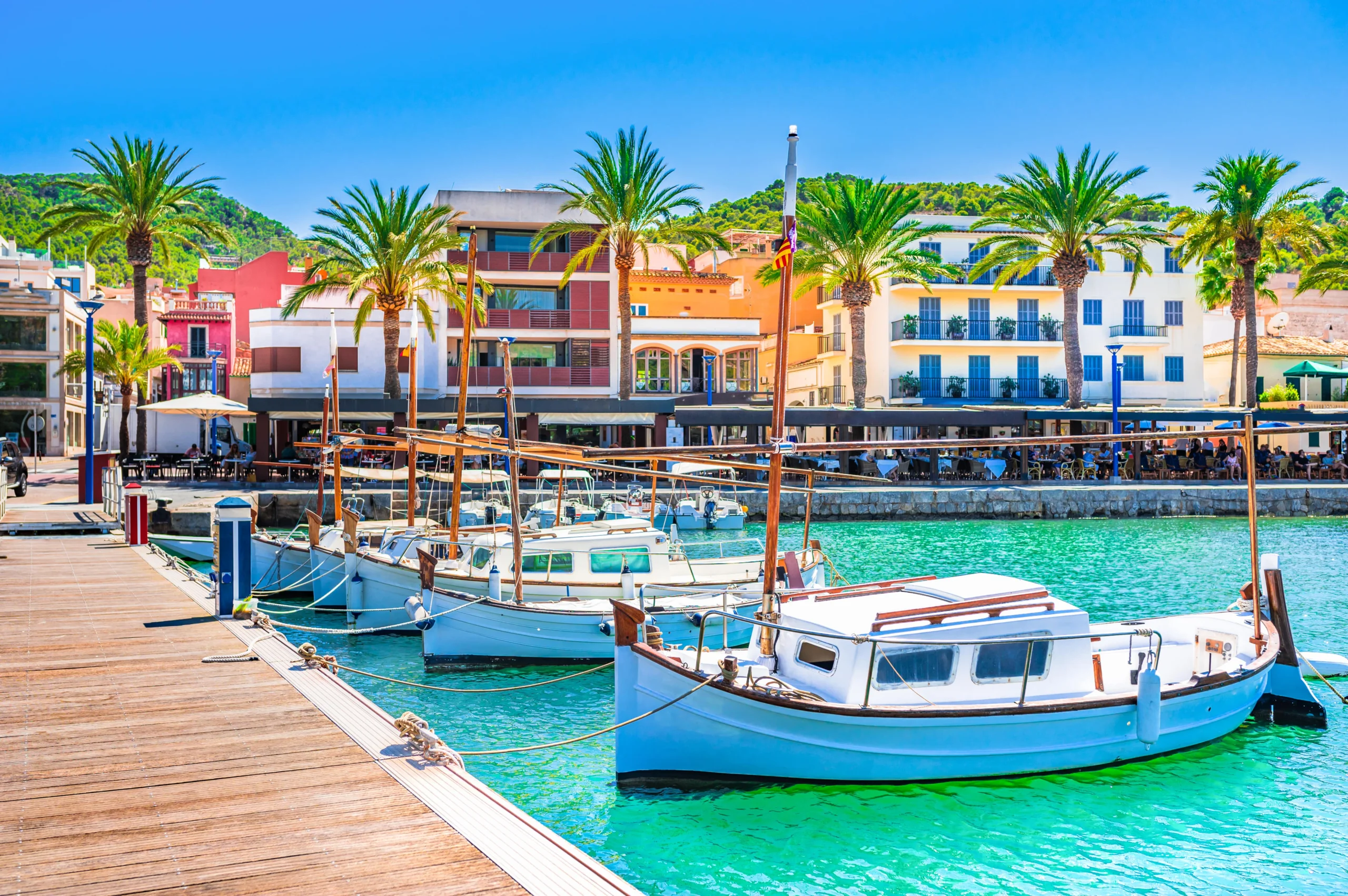
Mallorca’s luxury property market delivered 8-12% price appreciation through 2024, outpacing mainland Spain’s 6.9% growth. Transaction volumes declined 15-20% from post-pandemic highs, yet prices continued climbing as qualified demand exceeded available supply in prime locations. For buyers targeting properties above €3M, this creates a specific dynamic: competition for quality assets remains intense whilst poorly positioned inventory languishes.
This guide examines pricing structures, location fundamentals, buyer demographics, and investment mechanics for the €3M+ segment. Data draws from Spanish notary records, Idealista market reports, agency transaction data, and Balearic Government statistics through Q4 2024.
On Spanish income to EUR 600K
Year of arrival + 5 following
Official sources cited
Dividends, gains, rentals abroad
Last updated: 10 June 2026
By: Alexander Thornbury
Contents
- Why are UHNWI buyers choosing Mallorca over mainland Spain?
- Which locations command the highest property prices?
- What is driving luxury property price growth?
- How does Mallorca’s tax structure affect international buyers?
- What property types deliver the strongest returns?
- Which buyer nationalities dominate the €5M+ segment?
- How has Brexit affected British buyer activity?
- What residency options exist for property buyers?
- How should buyers evaluate Mallorca’s luxury agencies?
- What is the realistic timeline for a Mallorca property purchase?
Why are UHNWI buyers choosing Mallorca over mainland Spain?
The investment case rests on three structural factors that mainland alternatives cannot replicate.
Geographic scarcity creates natural supply constraints. The Serra de Tramuntana mountain range, designated UNESCO World Heritage since 2011, restricts coastal development to specific corridors. Port d’Andratx waterfront cannot expand. Deià cannot add inventory. What exists represents the permanent ceiling. Compare this to Costa del Sol, where developable coastline extends for kilometres and supply can theoretically respond to demand.
Connectivity eliminates the island penalty. Palma’s Son Sant Joan airport handled over 31 million passengers in 2023, ranking among Spain’s three busiest airports. Direct connections serve 170+ European destinations. Flight time from London: 2 hours 15 minutes. From Frankfurt: 2 hours. From Zurich: under 2 hours. The accessibility argument that historically favoured mainland coastal markets no longer applies.
Remote work adoption proved Mallorca functions as primary residence. The pandemic demonstrated that fibre coverage reaching 94% of coastal areas, combined with emerging coworking infrastructure in Palma, supports operational business requirements. International schools include Bellver International College and Baleares International School. When professional obligations run through video conference, Deià functions as effectively as Düsseldorf.
German buyers represent approximately 35-40% of foreign luxury transactions, followed by British purchasers at 20-25%, with Swiss and Scandinavian buyers making up significant additional shares. The typical profile: German entrepreneur aged 48-62, exiting a business, seeking primary residence with rental optionality. British buyers skew younger (38-55), maintaining UK operations whilst establishing a European base post-Brexit.
Which locations command the highest property prices?
Mallorca’s pricing structure divides into distinct tiers, each serving different buyer requirements and offering different return profiles.
Son Vida maintains the island’s most established ultra-luxury positioning at €10,000-€20,000/m² for top properties. This gated community 5km west of Palma offers 24-hour security, three championship golf courses, and panoramic bay views. Villas typically start around €4M, with the average 5-bedroom modern property trading at €6M-€8M. Exceptional estates exceed €30M. The buyer profile has shifted notably: where affluent retirees once dominated, younger technology entrepreneurs aged 40-45 now represent a significant purchasing cohort.
Port d’Andratx achieves comparable pricing for waterfront positions. Frontline marina villas command €10,000-€20,000/m², with southwest coastal properties more broadly achieving €6,000-€10,000/m². The 670-berth marina accommodates vessels up to substantial sizes, creating integrated land-sea living for yacht owners. Properties here commonly trade between €5M-€15M, with exceptional waterfront estates exceeding €20M.
Palma pricing varies significantly by neighbourhood. The Old Town commands €4,500+/m² for premium historic properties. Santa Catalina and Portixol waterfront areas attract younger professionals seeking urban Mediterranean lifestyle. Son Vida’s hillside district sees prices at €9,850/m² with growth forecasts of 7-10% annually. The city overall averages approximately €7,300/m², rapidly approaching Southwest elite pricing.
Deià and the Tramuntana villages represent the romantic, Old-World alternative. This UNESCO-protected cultural landscape commands €4,000-€8,000/m² for restored stone fincas, with exceptional sea-view properties reaching higher. A renovated farmhouse in Deià with sea views commonly asks €3M-€5M. Supply constraints here are absolute: the UNESCO designation prevents meaningful new development.
| Location | Price per m² | Typical Transaction Range | 2025 Growth Forecast |
| Son Vida | €10,000-€20,000 | €4M-€30M+ | +7-10% |
| Port d’Andratx (waterfront) | €10,000-€20,000 | €5M-€20M+ | +7-10% |
| Palma Old Town | €4,500-€7,000 | €800K-€3M | +7-10% |
| Southwest (Calvià, Andratx) | €7,700 average | €2M-€15M | +7-10% |
| Deià/Tramuntana | €4,000-€8,000 | €3M-€8M | +7-10% |
| Central Island | €4,165 | €500K-€2M | +13.5% (value discovery) |
| Eastern Coast | €3,240 | €400K-€1.5M | +3-5% |
What is driving luxury property price growth?
Five structural factors explain sustained appreciation despite global economic headwinds.
Remote working fundamentally altered the value proposition. Pre-pandemic luxury buyers required properties for 8-12 weeks annually. Current data suggests a majority of €3M+ purchases now involve buyers planning 6+ months annual residence. Properties shifted from holiday assets to operational real estate supporting working lifestyles.
Cash buyers dominate luxury transactions. Approximately 70-80% of €5M+ purchases complete without mortgage financing. Buyers liquidating Northern European property portfolios, where rental yields compressed to 2-3%, redeploy capital into Mallorca’s stronger yield profile whilst capturing annual appreciation.
Tourism licensing creates artificial scarcity. Mallorca froze new tourism licence issuance in most municipalities in 2018. Properties with existing licences trade at 15-25% premiums versus identical unlicensed properties. This regulatory constraint effectively segments the market.
Supply constraints intensify annually. Building permits for luxury-segment properties dropped significantly from 2019 levels. Agents describe high-end inventory as “almost empty.” If excluding yet-to-be-completed new builds, the supply of holiday properties above €1M was down approximately 11.5% year-on-year by early 2024.
The luxury segment dramatically outperforms. Properties valued €800K and above have seen values rise approximately 150% over five years, vastly outperforming the general market. Sea-view villas command up to an 18.8% premium over similar homes without views. A private pool can increase a villa’s price by an estimated 40-50%.
How do investment returns compare by property type?
| Property Type | Typical Yield | Capital Appreciation | Combined Return | Risk Profile |
| Licensed finca with tourism permit | 3.5-4.5% | 5-7% | 8.5-11.5% | Medium (licensing dependent) |
| Palma urban rental | 3.6-4.6% | 5-8% | 8.6-12.6% | Lower (diverse demand) |
| Waterfront villa (licensed) | 2.8-3.5% | 7-10% | 9.8-13.5% | Medium (seasonal) |
| Son Vida villa | 1-2% | 7-10% | 8-12% | Lower (owner-occupied) |
| Deià finca | 1.5-2.5% | 5-7% | 6.5-9.5% | Higher (niche market) |
How does Mallorca’s tax structure affect international buyers?
Property transfer tax represents the largest upfront cost for resale purchases. The Balearic Islands apply progressive rates:
- Properties up to €400,000: 8%
- €400,001 to €600,000: 9%
- €600,001 to €1,000,000: 10%
- €1,000,001 to €2,000,000: 12%
- Over €2,000,000: 13%
For a €5M property, this calculates to approximately €600,000 in transfer tax (12% effective rate). New construction follows different taxation: 10% VAT plus stamp duty of 1.5-2%.
Wealth tax underwent significant reform in 2024. The Balearic Islands raised the tax-free allowance from €700,000 to €3,000,000 per individual. A €5M villa now triggers approximately €5,600 annual wealth tax for a single owner (only the €2M above threshold gets taxed) versus €64,400 under previous rules. Joint ownership by married couples eliminates wealth tax entirely for properties up to €6M.
Non-resident rental income is taxed at 19% for EU residents, 24% for non-EU residents. British citizens currently maintain the 19% rate through bilateral agreement. Deductible expenses include IBI property tax, community fees, insurance, utilities, management fees, repairs, mortgage interest, and property depreciation (3% annually of building value).
Capital gains tax applies at 19% for EU residents (24% non-EU) on property sale profits. The buyer must withhold 3% of sale price and pay directly to Spanish tax authorities as advance payment against the seller’s liability.
What are the total acquisition costs for a €5M property?
| Cost Component | Amount | Percentage |
| Property transfer tax | €600,000 | 12% |
| Legal fees | €50,000 | 1% |
| Notary fees | €3,000 | 0.06% |
| Land registry | €2,500 | 0.05% |
| Total acquisition costs | €655,500 | 13.1% |
What property types deliver the strongest returns?
Restored fincas with tourism licences generate superior total returns. A €4M licensed finca in Sóller can generate approximately €140,000-€180,000 annually through short-term rentals. An identical unlicensed property restricted to long-term letting might achieve €70,000-€95,000 annually.
Palma penthouses in historic buildings deliver consistent performance through year-round professional rental demand. Remote workers seeking 6-12 month accommodation pay €3,000-€4,500 monthly for quality properties, generating stable income less affected by tourism seasonality.
Waterfront villas with private beach access capture both appreciation and rental premiums. Mallorca has limited privately-owned beachfront, with a significant portion of waterfront transactions occurring off-market through relationship networks.
The licensing constraint proves critical for rental-focused investors. Properties without tourism licences can only long-term let at substantially lower yields. Buyers must verify licence status through municipal registry rather than trusting seller representations. Enforcement has intensified, with fines up to €40,000 for unlicensed short-term rentals.
Which buyer nationalities dominate the €5M+ segment?
German buyers represent 35-40% of foreign luxury transactions, historically the dominant nationality. They favour the Southwest, particularly Santa Ponsa (nicknamed “Little Germany”), Paguera, and Port d’Andratx. Key requirements include German-speaking services, proximity to German international schools, and golf access. Decision timelines run 12-16 weeks with comprehensive documentation requirements.
British buyers account for 20-25% and skew younger than the German cohort. Post-Brexit, they increasingly seek golden visa residency through €500,000+ purchases. Favoured areas include Palma urban (Santa Catalina, Old Town), Port d’Andratx, and Pollença. Decision timelines average 8-12 weeks.
Scandinavian buyers maintain approximately 10-15% market share, particularly from Sweden, Norway, and Denmark. Strong purchasing power, preference for rental income properties, and existing community infrastructure (Swedish Church in Palma, Scandinavian schools) support sustained demand.
American buyers represent an emerging growth segment. USD strength versus EUR creates purchasing power advantage. Direct flight connectivity has improved. Buyer profile: technology entrepreneurs 40-60, finance professionals, multi-property international portfolios.
Younger technology wealth has reshaped ultra-prime enclaves. Son Vida now attracts entrepreneurs in their 30s and 40s who bring families, integrate with local culture, and spend lavishly on experiences. As one local agent observed, these buyers “spend €15,000 over dinner” and purchase the luxury cars they restrained themselves from buying in their home countries.
| Nationality | Market Share | Average Transaction | Preferred Locations | Decision Timeline |
| German | 35-40% | €1.5M-€5M | Southwest, golf communities | 12-16 weeks |
| British | 20-25% | €1M-€4M | Palma, Port d’Andratx | 8-12 weeks |
| Swiss | 8-12% | €2M-€6M | Son Vida, premium developments | 10-14 weeks |
| Scandinavian | 10-15% | €1.5M-€4M | Coastal, rental properties | 8-12 weeks |
| American | 5-8% | €2M-€5M | Palma, coastal | 10-14 weeks |
How has Brexit affected British buyer activity?
British buyer volumes dropped approximately 30% between 2019-2021, then recovered to roughly 85-90% of pre-Brexit levels by 2024. Residency applications from British citizens increased substantially as the 90-in-180 day visitor limit forced strategic adaptation.
The 90-day rule fundamentally changed usage patterns. British non-residents can spend only 90 days within any rolling 180-day period across all Schengen countries. For property owners planning extensive use, this necessitates either Spanish residency or careful allocation of limited visiting days.
Mortgage access tightened significantly. Spanish banks now classify British applicants as non-EU residents, requiring 40-50% deposits versus 30% for EU citizens. Interest rates increased 0.4-0.7% versus EU resident rates. Approximately 80% of British luxury purchases now complete without financing.
Tax treatment maintained favourable positioning. Spain granted transitional relief maintaining 19% rental income and capital gains rates for British citizens, matching EU resident treatment.
British buyer profile shifted. Pre-Brexit: retirees seeking sunshine and golf. Post-Brexit: remote-working entrepreneurs aged 38-52, professionals establishing Spanish residency for operational flexibility, and family offices diversifying European property holdings.
What residency options exist for property buyers?
Golden Visa (€500,000+ property investment) provides Spanish residency without requiring 183+ days annual presence. The permit extends to spouse and dependent children. After 5 years: permanent residency eligibility. After 10 years: citizenship eligibility. This route suits buyers purchasing €500,000+ property regardless, making residency application a logical extension rather than separate decision.
Non-lucrative visa suits retirees with passive income exceeding €28,800 annually. Requirements include €76,800+ liquid assets, private health insurance, and Spanish property ownership or rental contract. Cannot work or conduct business in Spain.
Digital nomad visa allows remote workers employed by non-Spanish companies to reside in Spain. Income must derive primarily from outside Spain (80%+ threshold). Minimum €28,800 annual income from remote work required.
Tax residency triggers worldwide income taxation at 19-47% progressive rates. Spending 183+ days annually in Spain establishes tax residency regardless of visa status. Proper structuring requires professional cross-border tax advice before establishing residence.
How should buyers evaluate Mallorca’s luxury agencies?
International franchise networks operate multiple offices island-wide with extensive luxury portfolios. Strong buyer networks across German, British, and American markets. Standard commission: 6-7%. Systematic processes suit buyers wanting documented procedures and brand recognition.
Global auction house affiliates maintain offices with connections through international networks. Commission: 5-6%. Marketing capabilities include professional video production and international advertising campaigns reaching qualified buyers globally.
Boutique specialists control significant off-market inventory. Firms handling €5M+ transactions maintain exclusive relationships with property owners, often controlling 150-200 properties whilst actively listing only 40-50. Access requires relationship introduction and proof of funds verification. Commission: 4-5%.
Independent agents facilitate an estimated 30% of €5M+ transactions through pure relationship networks. These deals never appear in public databases. Commission rates negotiate case-by-case, typically 3-4%.
| Agency Type | Commission | Portfolio Size | Off-Market Access | Best For |
| International franchise | 5-7% | 60-120 properties | Limited | Brand recognition, systematic process |
| Boutique specialist | 4-5% | 30-60 listed + off-market | Strong | Discretion, €5M+ transactions |
| Independent agent | 3-4% | 5-15 properties | Variable | Relationship-based deals |
| Buyer representative | 3% (buyer-paid) | Access to all | Good | International buyers wanting advocacy |
What is the realistic timeline for a Mallorca property purchase?
Off-market transactions: 8-14 weeks from initial introduction to completion. These deals move faster because sellers are pre-committed and buyers are pre-qualified.
On-market purchases: 12-18 weeks from first viewing to completion. Competition for quality properties can extend timelines if negotiations stall.
New development purchases: 16-24 weeks for completed units. Off-plan purchases: 24-36 months depending on construction phase.
Legal due diligence requires 4-6 weeks. NIE number acquisition: 2-4 weeks. Financing (if required) adds 6-8 weeks for non-EU applicants.
Budget 14-16 weeks for standard purchases, 20+ weeks for complex transactions involving financing, residency applications, or multi-property deals.
Purchase Process Timeline
| Phase | Duration | Key Activities |
| Property search | 4-12 weeks | Viewings, market orientation, requirement refinement |
| Offer and negotiation | 1-3 weeks | Price agreement, reservation contract, initial deposit (€10,000-€50,000) |
| Legal due diligence | 4-6 weeks | Title search, encumbrance verification, licence confirmation |
| NIE acquisition | 2-4 weeks | Foreign identification number (mandatory) |
| Financing (if required) | 6-8 weeks | Bank approval, documentation, valuation |
| Notary completion | 1-2 weeks | Final payment, deed signing, key handover |
| Post-completion | 2-4 weeks | Registry filing, utility transfers, tax payments |
Key Takeaways
Mallorca’s luxury property market combines structural supply constraints with sustained international demand, creating conditions for continued appreciation in prime locations. Buyers should:
- Prioritise licensed properties if rental income matters: the 15-25% premium recovers through superior yields within 6-8 years
- Consider joint ownership for wealth tax optimisation: properties up to €6M incur zero wealth tax for married couples
- Budget 13-15% above purchase price for total acquisition costs including transfer tax, legal fees, and notary charges
- Verify all claims independently: tourism licence status through municipal registry, not seller representations
- Engage cross-border tax advice before establishing residency: the decision triggers worldwide income taxation implications
The market rewards patient capital deployed strategically. Forced or rushed purchases in constrained-supply markets typically underperform careful positioning.
For exclusive access to Mallorca’s most exceptional luxury properties and comprehensive market insight, contact our specialized advisory team at mallorca@blackprive.com
Author Bio
Alexander Thornbury specialises in Mediterranean luxury property markets and cross-border investment structuring for UHNWI clients. With 15 years advising on European real estate transactions exceeding €500 million in aggregate value, Alexander provides institutional-grade analysis of legal processes, due diligence requirements, and transaction risk mitigation strategies. His expertise in Spanish property law and Balearic market customs helps international buyers navigate complex legal frameworks protecting seven-figure investments. He is the author of Quiet Capitals (2026) and contributes market intelligence to Black Privé’s research library.
His analysis is for informational purposes only and does not constitute legal, tax, or investment advice.
Related Articles
- Palma vs Andratx vs Deià: Which Mallorca Location Matches Your Lifestyle?
- Mallorca Property Taxes for Non-Residents: Complete Guide 2025-2026
- Mallorca Luxury Property Market Forecast 2025-2026: Expert Analysis
- Mallorca Property Purchase: Complete Legal Process Guide
Market data sources: Spanish Notary Statistics, Idealista Market Reports 2024, Balearic Government Statistics, National Statistics Institute (INE), Aena Airport Statistics, Finexity Research, Steinbeis Transfer Institute market studies, agency transaction data.
Property prices reflect Q4 2024 market conditions.
Individual circumstances vary. Readers should obtain professional advice specific to their situation.