
A foreigner can own freehold in Dubai, but only inside designated areas, and the list of which communities qualify is the single fact most often got wrong. The confusion is understandable: the founding law names its zones by plot number, most of the famous addresses were added later by separate decrees, and brokerage websites treat “freehold” as a marketing word rather than a legal status. This guide sets out who can own what, where, and how to prove a specific address actually qualifies before you commit.
In designated areas only
The correct legal category
The authority, not a brochure
The enabling instrument
Last updated: July 2026
By: Alexander Thornbury
Can a foreigner own freehold in Dubai?
Yes, inside designated areas. The instrument is Regulation No. 3 of 2006, issued under Dubai’s Real Property Registration Law, and it grants a non-UAE national one of three rights over property in those areas: freehold with no time limit, usufruct, or a leasehold of up to 99 years. Outside the designated areas, freehold is not on the table for a foreigner, who is limited to usufruct or leasehold at best.
The term to hold onto is “non-UAE nationals”. That is the exact category the regulation uses, and it matters because a great deal of market commentary substitutes “non-GCC nationals”, which the law does not say. The three-rights structure is the foundation of every Dubai purchase by a foreign buyer, and the designated-area question is where care is required. For the full buying picture, see our international buyer’s guide to Dubai property.
| The three rights a foreigner can hold | What it is | Available where |
|---|---|---|
| Freehold | Ownership with no time limit | Designated areas only |
| Usufruct | A right to use and benefit for a defined period | Designated and, in forms, elsewhere |
| Leasehold | A lease of up to 99 years | The usual foreign right outside designated areas |
Which areas are actually designated?
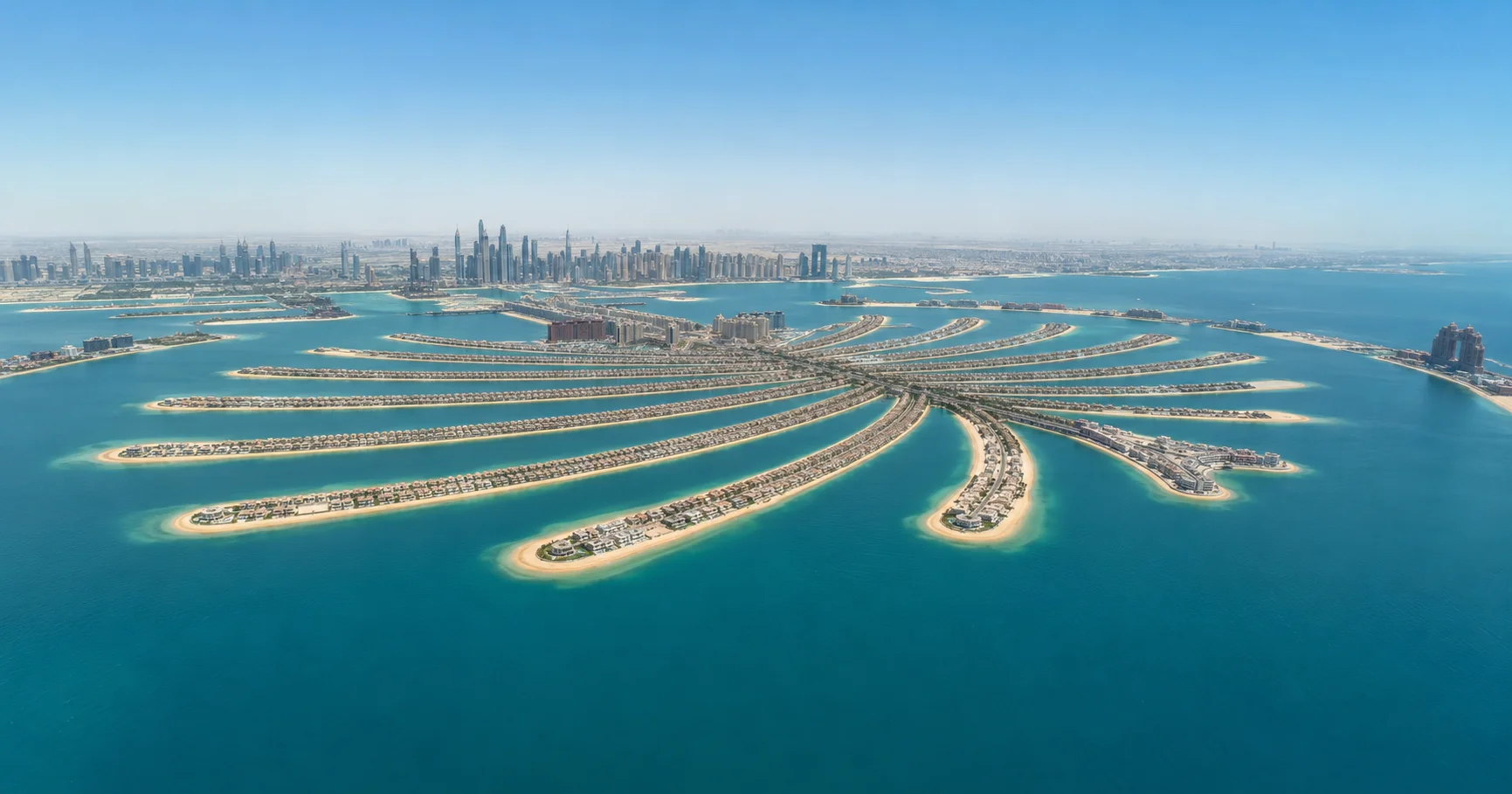
The founding 2006 regulation lists its designated zones by individual plot number, not by the community names buyers recognise. Read literally, it names a specific set of areas, and among the ones a prime buyer cares about, three appear by name: Palm Jumeirah, Dubai Marina and Emirates Hills. The World Islands and Palm Jebel Ali are also named. That is the original, statutory core.
What this means in practice is that the 2006 text is narrower than the Dubai freehold map most buyers have in their heads. The regulation is the enabling instrument, the thing that made foreign freehold possible at all. It is not, on its own, the authority that every fashionable address is freehold today. That authority came later, and it lives somewhere else.
| Prime address | Named in the 2006 regulation? | Freehold basis to check |
|---|---|---|
| Palm Jumeirah | Yes, by name | Regulation 3/2006 + title deed |
| Emirates Hills | Yes, by name | Regulation 3/2006 + title deed |
| Dubai Marina | Yes, by name | Regulation 3/2006 + title deed |
| Downtown Dubai | No | DLD current designated map + title deed |
| Dubai Hills, District One, Jumeirah Bay | No | DLD current designated map + title deed |
| Business Bay, Emaar Beachfront, Bluewaters | No | DLD current designated map + title deed |
Why isn’t Downtown Dubai in the founding law?
Because it, and most of modern prime Dubai, was designated after 2006. Downtown Dubai, Dubai Hills Estate, Jumeirah Bay Island, District One, Business Bay, Emaar Beachfront, Bluewaters and Dubai Creek Harbour are all transacted as freehold every day, and foreign buyers own there without difficulty. But their freehold status rests on later rulers’ decrees and master-plot designations recorded on the Land Department’s current map, not on the 2006 text.
For a buyer, the distinction is not academic. It sets the rule for checking. Never cite the 2006 regulation as proof that a specific modern community is freehold, because for most of them it says nothing at all. The citation that matters for any named address is the Land Department’s current designated-areas map and, ultimately, the title deed on the property itself. A brochure calling a project “freehold” is a marketing claim until the map and the deed confirm it.
Where can a foreigner not buy freehold?
In the areas outside the designated zones, a non-UAE national is generally limited to usufruct or long leasehold rather than freehold. These tend to be the older central districts of Dubai rather than the master-planned communities built for international buyers. The practical effect is that the newer prime and branded developments are almost all designated, while parts of the historic core are not.
Because the boundary between designated and non-designated areas is set by the current map and has shifted over time, the safe approach is not to rely on any published list of excluded districts, including this one, but to confirm the specific plot against the Land Department’s map before making an offer. If an address falls outside the designated areas, the ownership right on offer will be usufruct or leasehold, and the terms of that right, especially its length and renewal, become the thing to scrutinise.
Do Gulf nationals have different rights?
This is where a widely repeated claim needs care. The common line is that GCC nationals may buy anywhere in Dubai while other foreigners are confined to designated areas. The 2006 regulation does not say that. Its operative category is “non-UAE nationals”, drawing no distinction between Gulf and other foreign buyers, and the UAE Government’s own property guidance draws no such distinction either.
If a separate GCC entitlement exists, it rests on an instrument outside Regulation 3/2006. The honest position for any buyer, Gulf or otherwise, is to treat the designated-area rule as the operative one and confirm rights for the specific nationality and the specific plot with the Land Department, rather than relying on a market convention that the founding law does not state.
How do you prove an address qualifies before you buy?
Three checks settle it, and none of them is the brochure. First, find the plot on the Land Department’s current designated-areas map and confirm the community is designated for freehold. Second, obtain the title deed for the specific unit or plot and confirm the ownership right it records: freehold, usufruct, or leasehold with its term. Third, if anything is unclear, put the question to the Land Department directly for that plot and that nationality rather than accepting a general assurance.
This matters most on off-plan, where there is no existing title deed to inspect and the buyer is relying on the developer’s designation and the project’s registration. On a resale, the deed exists and can be read. Either way, the developer’s or agent’s description of a project as freehold is a starting point, not a conclusion. Our guide to buying off-plan in Dubai covers the registration checks that go alongside this one.
Key takeaways
- Foreigners own freehold only in designated areas, under Regulation No. 3 of 2006, which grants freehold, usufruct or up to 99-year leasehold.
- The law’s category is “non-UAE nationals”, not “non-GCC”. A separate Gulf-national entitlement is not stated in the 2006 regulation.
- Palm Jumeirah, Dubai Marina and Emirates Hills are named in the founding law. Downtown, Dubai Hills, District One and Jumeirah Bay are freehold under later designations.
- The 2006 regulation is the enabling instrument, not a current inventory. For any address, the authority is the DLD map and the title deed.
- A brochure calling a project freehold is a claim, not proof. Confirm the plot on the DLD map and read the deed before you offer.
Frequently asked questions
Can foreigners own property outright in Dubai?
Yes, as freehold, but only inside designated areas under Regulation No. 3 of 2006. A non-UAE national can hold freehold, usufruct or leasehold up to 99 years there. Outside those areas, freehold is not available to foreigners.
What are the designated freehold areas?
Areas the Dubai Land Department has designated for foreign freehold ownership. Palm Jumeirah, Dubai Marina and Emirates Hills are named in the founding 2006 regulation; Downtown, Dubai Hills, District One, Jumeirah Bay and others are designated under later decrees recorded on the DLD map.
Is Downtown Dubai freehold for foreigners?
It is transacted as freehold and foreign buyers own there, but it is not named in the 2006 regulation. Its status rests on a later designation recorded on the Land Department’s current map, which is the document to confirm it against.
Can I rely on a developer calling a project “freehold”?
Treat it as a starting point, not proof. Confirm the plot on the Dubai Land Department’s designated-areas map and read the title deed, which records whether the right is freehold, usufruct or leasehold. On off-plan there is no deed yet, so the project’s registration and designation carry the weight.
Do GCC nationals have wider ownership rights than other foreigners?
The 2006 regulation does not say so. It uses the category “non-UAE nationals” and draws no GCC distinction, and UAE Government property guidance draws none either. Any separate Gulf entitlement would rest on a different instrument, so confirm rights for the specific nationality and plot with the Land Department.
What is the difference between freehold, usufruct and leasehold here?
Freehold is ownership with no time limit. Usufruct is a right to use and benefit from a property for a defined period. Leasehold runs up to 99 years for a foreign buyer in a designated area. Which one you get is recorded on the title deed.
Where can foreigners not buy freehold in Dubai?
Generally in the non-designated areas, which tend to be older central districts rather than the master-planned communities. Because the boundary is set by the current map and has changed over time, confirm the specific plot against the DLD map rather than relying on any published list.
How do I check whether a specific address is freehold?
Three steps: locate the plot on the DLD designated-areas map, obtain and read the title deed for the unit, and, if anything is unclear, ask the Land Department directly for that plot and nationality. The brochure is never the final word.
Sources
- Dubai Legislation portal – Regulation No. 3 of 2006 (designated areas) and Law No. 7 of 2006 (Real Property Registration)
- Dubai Land Department – designated-areas map, title registration, investor guidance
- u.ae – UAE Government portal: expatriates buying property in Dubai
Figures current at July 2026. Freehold status for a specific plot and nationality should be confirmed with the Dubai Land Department and a UAE-qualified lawyer before purchase.

About the author
Alexander Thornbury is a published author who writes on international property, tax and residency for high-net-worth buyers across Europe, the Gulf and North America. His work focuses on the practical mechanics of cross-border purchase: what a buyer actually pays, owes and signs. More at alexanderthornbury.com.