
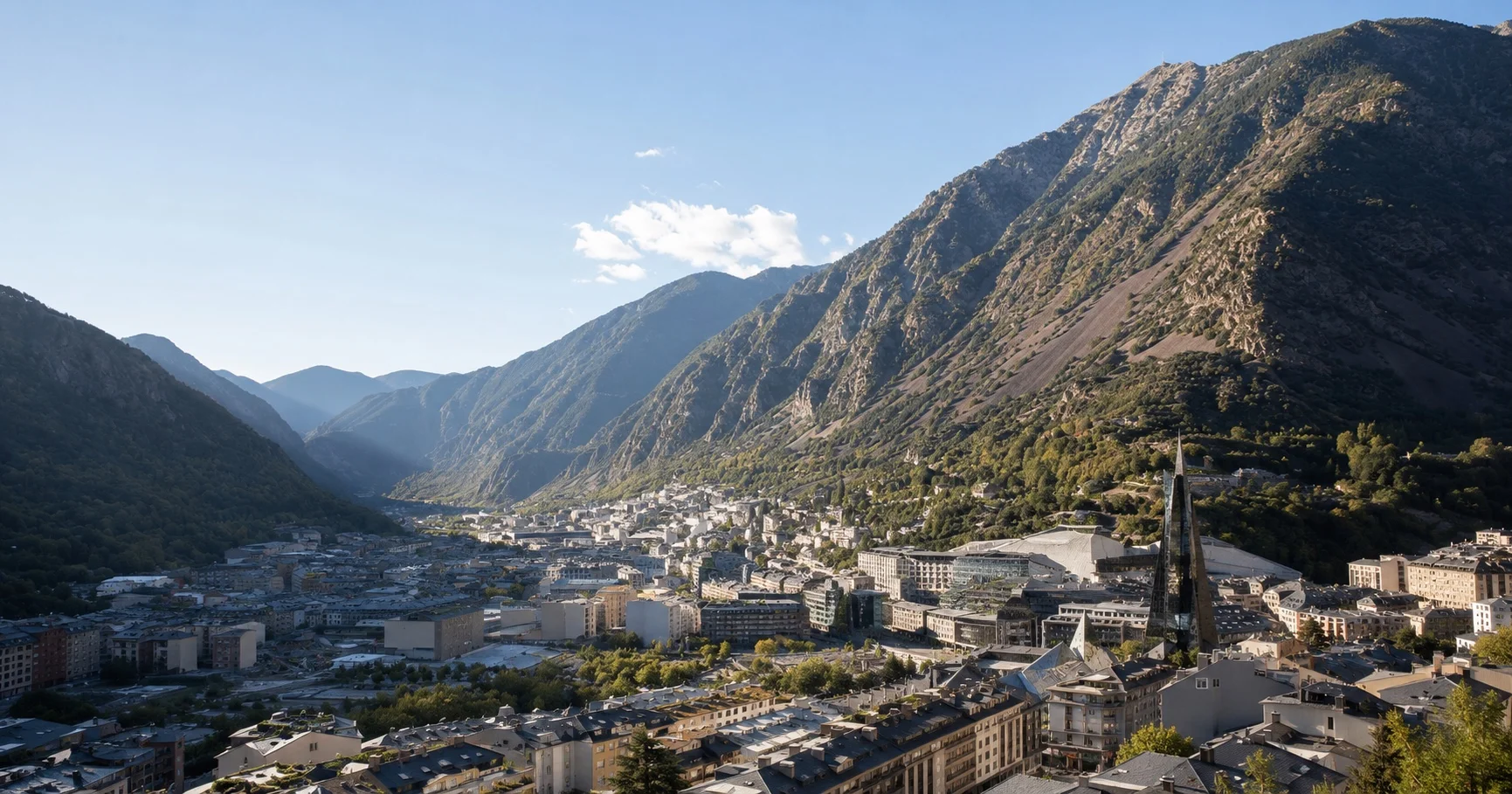
Andorra reformed its residency rules in January 2026, and the figures most guides quote are already out of date. Passive residency, the route that suits most relocating buyers, now turns on a EUR 1,000,000 investment or EUR 400,000 through the Housing Fund, and the old “refundable deposit” is now a non-refundable state contribution. This guide sets out both routes, what each actually costs and requires, and how residency connects to the low-tax benefit that draws people here.
Reformed by Llei 2/2026
Both routes compared
Every figure cited to primary sources
The real presence requirement
Last updated: 22 July 2026
By: Alexander Thornbury
How do you get residency in Andorra?
Through one of two routes, and the right one depends on whether you plan to work in Andorra or simply live there. Passive residency, formally residency without gainful activity, suits the retired, the independently wealthy and those running interests elsewhere. Active residency suits someone setting up or running a business in the country. Most EUR 2M-plus relocating buyers take the passive route, so this guide leads with it.
Both routes were tightened over 2024 to 2026, and the passive investment threshold in particular was raised in January 2026. Anyone reading a figure below EUR 1,000,000 for passive residency is reading pre-2026 guidance. For the full picture of buying alongside relocating, see our international buyer’s guide to Andorra property.
Passive residency: what it costs
Passive residency now requires either EUR 1,000,000 invested in Andorran assets, or EUR 400,000 routed through the Housing Fund, a lower-threshold option introduced alongside the reform. Your Andorran home can count toward the EUR 1,000,000, which is why the property purchase and the residency application are usually planned together.
On top of the investment sits a government deposit, and this is where older guides mislead. It is EUR 50,000 for the main applicant plus EUR 12,000 for each dependant, and it is a non-refundable contribution to the state, not a bond returned when you leave. Any source describing a refundable deposit is describing the old regime.
| Passive residency, the numbers | Amount | Note |
|---|---|---|
| Investment | EUR 1,000,000 in Andorran assets | Or EUR 400,000 via the Housing Fund |
| Government deposit | EUR 50,000 + EUR 12,000 per dependant | Non-refundable state contribution |
| Physical presence | 90 days a year minimum | Less than active residency requires |
| Also required | Health cover, income proof, clean record | Income above a set multiple of the minimum salary |
What are the ongoing requirements?
Passive residency is not a passport-of-convenience you file and forget. It asks for a minimum physical presence of 90 days a year in Andorra, private health insurance covering the country, a clean criminal record, and proof of income comfortably above the Andorran minimum salary, with an additional margin for each dependant. The investment and the deposit must be in place, and the residency is renewed rather than granted once.
The 90-day floor matters for two reasons. It is the minimum to keep the residency itself, and it sits well below the more-than-183-days test that establishes tax residency. In other words, meeting the residency presence requirement is not the same as becoming Andorran tax-resident, and it is tax residency that unlocks the low rates. The two thresholds are different, and planning around only the lower one is a common and expensive mistake.
Active residency: the alternative
Active residency is the route for someone incorporating or running a business in Andorra. It does not carry the EUR 1,000,000 passive-investment test. Instead it rests on setting up a genuine Andorran company or self-employment, a smaller deposit, and a higher physical-presence commitment than the passive route, reflecting that the holder is actually working in the country.
For an entrepreneur relocating with an operating business, active residency can be the more natural and less capital-intensive path. The exact company, deposit and presence requirements are set by the immigration authorities and are worth confirming directly before you plan around them, because this is the area where the detail shifts most. Take Andorran advice on which route fits your circumstances.
| Route | Passive residency | Active residency |
|---|---|---|
| Best for | Retired, independently wealthy, interests elsewhere | Running a business in Andorra |
| Investment test | EUR 1M, or EUR 400k via Housing Fund | No EUR 1M test; company set-up instead |
| Presence | 90 days a year minimum | Higher, reflecting active work |
Does buying a home count toward it?
Yes, for passive residency. Andorran property counts toward the EUR 1,000,000 investment threshold, which is why buyers usually line up the purchase and the residency application together rather than treating them as separate exercises. A single prime home in one of the better parishes can represent a substantial part, though not always all, of the required investment.
That said, the purchase itself is still a distinct legal step, with its own foreign investment authorisation and its own Foreign Investment Tax, covered in our Andorra tax guide. The property helps you meet the residency threshold; it does not on its own grant residency. Both processes need to run in parallel, ideally with the same advisers coordinating them.
What does residency actually get you?
The prize is access to Andorra’s tax regime once you become genuinely tax-resident: no wealth tax, no inheritance tax, no gift tax, and income tax topping out at 10%. But residency and tax residency are not the same thing. Residency is the right to live here; tax residency, which follows from spending more than 183 days a year in the country or centring your economic interests here, is what delivers the rates.
Residency is also not citizenship. Andorran naturalisation is a separate and lengthy process, and no amount of investment shortcuts it. What passive residency offers is a legal, low-tax base for someone genuinely relocating, not a passport and not a benefit you can claim while living mostly elsewhere. Treated as the former, it is one of Europe’s more attractive relocation routes.
Key takeaways
- Passive residency now needs EUR 1,000,000 in Andorran assets, or EUR 400,000 via the Housing Fund. Figures below that are pre-2026.
- The government deposit is EUR 50,000 plus EUR 12,000 per dependant, and it is non-refundable. The old refundable-bond guidance is wrong.
- Passive residency requires 90 days a year of presence; tax residency requires more than 183. They are different thresholds.
- Active residency suits those running an Andorran business, with no EUR 1M test but a higher presence commitment.
- Your home counts toward the EUR 1M investment, so plan the purchase and the residency together.
- Residency is not citizenship, and the tax benefit follows genuine tax residency, not the residency permit alone.
Frequently asked questions
How do you get residency in Andorra?
Through passive residency (for the retired or independently wealthy) or active residency (for those running an Andorran business). Most relocating property buyers take the passive route, which rests on an investment threshold and a minimum annual presence.
How much do you need to invest for Andorra passive residency?
EUR 1,000,000 in Andorran assets, or EUR 400,000 through the Housing Fund, following the January 2026 reform. Your Andorran home can count toward the EUR 1,000,000.
Is the Andorra residency deposit refundable?
No. It is now a non-refundable state contribution of EUR 50,000 for the main applicant plus EUR 12,000 per dependant. Older guides describing a refundable bond refer to the previous regime.
How many days a year do I need to spend in Andorra?
Passive residency requires a minimum of 90 days a year. Note that tax residency is a separate, higher test of more than 183 days a year, or having your centre of economic interest in Andorra.
What is the difference between passive and active residency?
Passive residency suits those not working in Andorra and rests on the EUR 1,000,000 investment (or EUR 400,000 via the Housing Fund) with a 90-day presence. Active residency suits those running an Andorran business, with no EUR 1M test but a higher presence requirement.
Does buying property give me residency in Andorra?
Not on its own. Property counts toward the passive-residency investment threshold, but residency is a separate application with its own requirements. The purchase and the residency application are best run in parallel.
What are the ongoing requirements for passive residency?
Maintaining the investment and deposit, spending at least 90 days a year in Andorra, holding private health cover, keeping a clean criminal record, and showing income above a set multiple of the Andorran minimum salary, with a margin per dependant. The permit is renewed, not granted once.
Does Andorra residency lead to citizenship?
Not quickly. Andorran naturalisation is a separate and lengthy process that investment does not shortcut. Residency gives the right to live in Andorra, not a passport.
What tax benefit does Andorra residency give?
Once you are genuinely tax-resident, no wealth tax, no inheritance tax, no gift tax, and income tax topping out at 10%. The benefit follows tax residency (more than 183 days a year or your centre of economic interest here), not the residency permit alone.
Sources
- Butlleti Oficial del Principat d’Andorra – Llei 2/2026 (residency reform), immigration law
- Govern d’Andorra – Departament de Tributs i Fronteres (tax residency, income tax)
- Govern d’Andorra – immigration and residency (Immigracio)
Figures current at July 2026. Andorra’s residency rules were reformed in January 2026 and should be confirmed with the Andorran immigration authorities or an Andorran lawyer before you apply.

About the author
Alexander Thornbury is a published author who writes on international property, tax and residency for high-net-worth buyers across Europe. His work focuses on the practical mechanics of cross-border purchase: what a buyer actually pays, owes and signs. More at alexanderthornbury.com.