
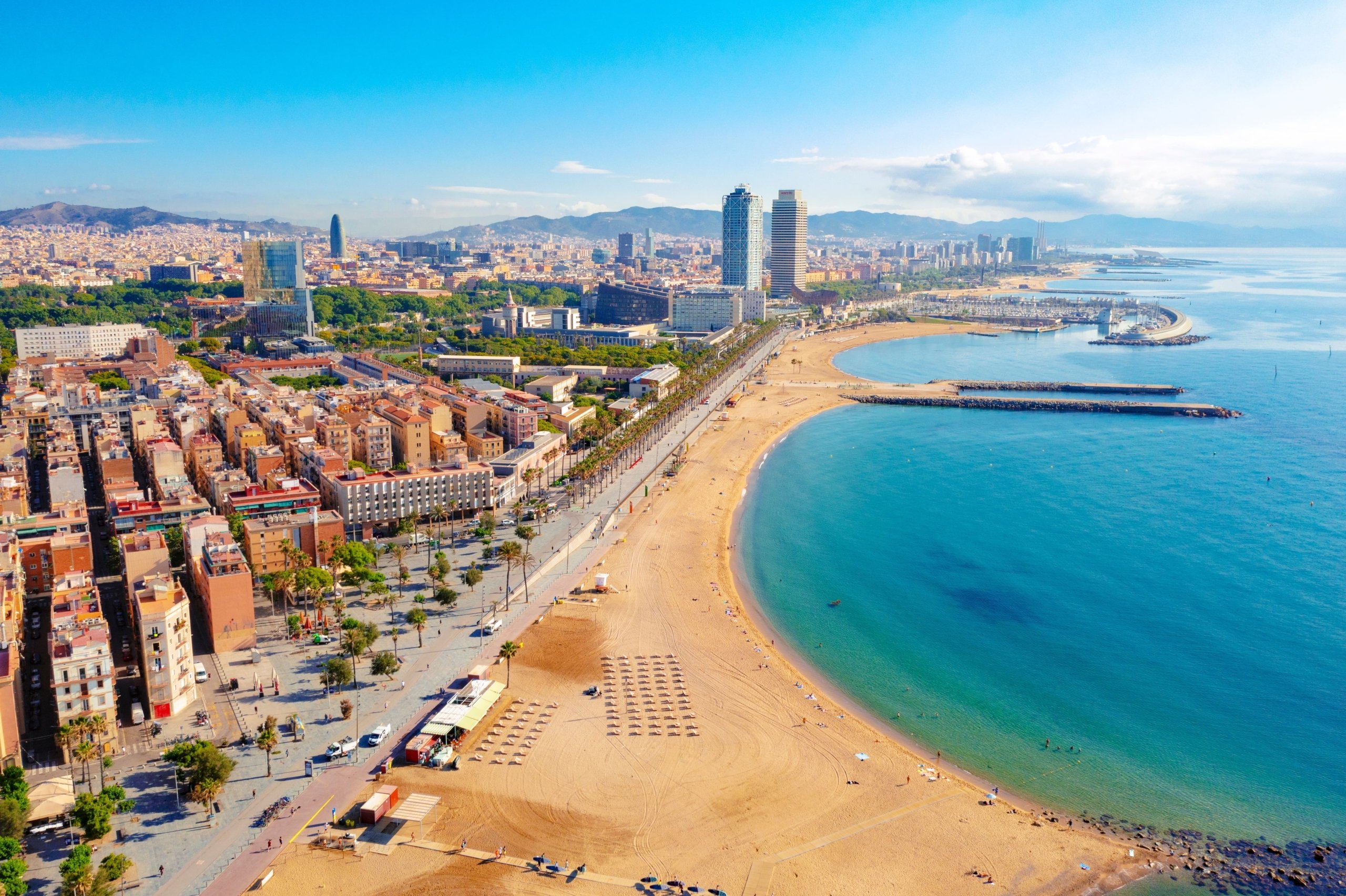
Barcelona commands a unique position among European luxury markets. Where Madrid offers capital prestige and Marbella delivers resort glamour, Barcelona delivers something neither can replicate: Mediterranean lifestyle fused with genuine urban sophistication, architectural heritage that money cannot recreate, and price points that still undercut comparable European capitals by meaningful margins.
This guide provides the data, analysis and practical intelligence that UHNWI buyers require when evaluating Barcelona’s €3M+ property market. We examine six premium zones, decode the June 2025 tax reforms that have recalibrated acquisition costs, and assess what the termination of Spain’s Golden Visa programme means for international buyers navigating residency in the post-April 2025 landscape.
Contents
- How much do luxury properties cost in Barcelona’s prime zones?
- Which neighbourhoods attract UHNWI buyers?
- Who is buying luxury property in Barcelona?
- What are the acquisition costs after the June 2025 tax changes?
- How has the Golden Visa termination affected the market?
- What do the 2028 tourist rental restrictions mean for investors?
- How does Barcelona compare to Madrid and Marbella?
- What is the 2025-2026 market outlook?
How Much Do Luxury Properties Cost in Barcelona’s Prime Zones?
Barcelona’s luxury market operates across distinct pricing tiers. The citywide average reached €4,661 per square metre by April 2025, representing a 17.49% year-on-year increase that outpaced most European capitals. However, prime zones command substantial premiums that position Barcelona’s finest addresses alongside London and Paris equivalents.
Savills’ World Cities Prime Residential Index 2025 recorded Barcelona’s prime average at €9,300 per square metre, placing the city seventh among European markets and significantly below Madrid’s €11,100 prime average. This differential continues to attract value-conscious UHNWI buyers seeking Mediterranean lifestyle without Mediterranean resort pricing.
Prime Zone Pricing Summary
| Zone | Average €/sqm | Ultra-Prime €/sqm | Typical Property | 2024 Growth |
| Passeig de Gràcia / Quadrat d’Or | €9,000-12,000 | €15,000-20,000+ | Modernista apartments | +12% |
| Pedralbes | €8,000-10,000 | €12,000-15,000 | Villas, estates | +8% |
| Sarrià-Sant Gervasi | €6,200-7,500 | €9,000-11,000 | Family apartments | +11% |
| Eixample Dreta | €6,800-8,500 | €10,000-12,000 | Period apartments | +14% |
| Diagonal Mar / Poblenou | €5,500-8,000 | €12,000-20,000 | Contemporary penthouses | +16.5% |
| Tibidabo | €7,000-9,000 | €11,000-14,000 | Hillside villas | +9% |
Record transactions continue to establish new benchmarks. The €45 million Mandarin Oriental penthouse sale achieved approximately €69,231 per square metre, demonstrating that Barcelona’s ultra-prime ceiling has risen substantially since 2020.
Price Trajectory 2020-2025
| Year | Prime Average €/sqm | Annual Change | Key Market Driver |
| 2020 | €6,200 | -3.1% | Pandemic correction |
| 2021 | €6,450 | +4.0% | Recovery begins |
| 2022 | €7,100 | +10.1% | International return |
| 2023 | €7,800 | +9.9% | Golden Visa demand |
| 2024 | €8,600 | +10.3% | Supply constraints |
| 2025 (H1) | €9,300 | +8.1% (annualised) | Foreign capital surge |
Which Neighbourhoods Attract UHNWI Buyers?
Barcelona’s premium residential geography divides into six distinct zones, each serving different buyer priorities.
Pedralbes: Old Money and Diplomatic Barcelona
Pedralbes remains Barcelona’s most exclusive residential address. The neighbourhood’s villa stock, mature gardens and proximity to international schools including the American School of Barcelona and Oak House School have established it as the default choice for relocating families and C-suite executives.
Property here rarely trades below €3 million, with substantial estates regularly commanding €8-15 million. The Royal Polo Club de Barcelona anchors the lifestyle proposition, while the 15-minute commute to the airport via the Ronda de Dalt ensures Pedralbes suits internationally mobile residents.
For detailed analysis of Pedralbes property opportunities, see our Pedralbes property guide.
Quadrat d’Or and Passeig de Gràcia: Architectural Prestige
The “Golden Square” contains 100 blocks of Europe’s finest Modernista architecture, with residential units available in buildings by Gaudí, Domènech i Montaner and Puig i Cadafalch. Buyers seeking architectural heritage and design significance gravitate here, accepting smaller footprints in exchange for irreplaceable settings.
Principal floor apartments with original features command the highest premiums, while penthouses added during later renovations offer contemporary living atop historic structures. Explore the complete analysis in our Quadrat d’Or and Passeig de Gràcia guide.
Sarrià-Sant Gervasi: Family-Oriented Prestige
This upper zone combines village atmosphere with urban convenience. The Turó Park area attracts particular demand, with limited supply driving prices toward Pedralbes levels. Families appreciate the neighbourhood’s integration of green space, quality dining and proximity to multiple international school options.
Eixample Dreta: Urban Sophistication
Beyond the Quadrat d’Or, the broader Eixample Dreta offers more accessible entry points to Barcelona’s distinctive grid architecture. Refurbished apartments with Catalan vault ceilings, hydraulic floor tiles and generous ceiling heights trade between €6,800 and €8,500 per square metre, substantially below Passeig de Gràcia equivalents.
Diagonal Mar and Poblenou: Tech Wealth and Waterfront
Sant Martí district delivered Barcelona’s strongest price growth in 2024, rising 16.5% as tech wealth from the 22@ innovation district translated into residential demand. Contemporary penthouses with Mediterranean views now command €12,000-20,000 per square metre in premium developments.
The district hosts 160 international tech hubs including operations from Microsoft, Amazon and Porsche Digital, creating persistent demand for executive housing. For investment-focused analysis, see our Diagonal Mar and Poblenou guide.
Gothic Quarter: Heritage Conversion
Palace conversions in the Gothic Quarter represent Barcelona’s most distinctive luxury offering. Medieval stone walls, double-height spaces and proximity to cultural institutions attract collectors and design-focused buyers. However, protected building status limits renovation options and extends project timelines significantly.
Zone Selection Matrix
| Priority | Recommended Zone | Key Advantage |
| Family relocation | Pedralbes | Schools, gardens, security |
| Architectural heritage | Quadrat d’Or | Modernista masterpieces |
| Village lifestyle | Sarrià | Community, green space |
| Urban investment | Eixample Dreta | Liquidity, yields |
| Contemporary waterfront | Diagonal Mar | Tech proximity, appreciation |
| Historic character | Gothic Quarter | Unique conversion properties |
Who Is Buying Luxury Property in Barcelona?
Foreign buyers now represent approximately 30% of Barcelona’s property market as of September 2025, with the highest concentrations in prime central districts. This figure has increased significantly from pre-pandemic levels, driven by remote work flexibility, geopolitical considerations, and Barcelona’s quality-of-life proposition.
Foreign Buyer Nationality Breakdown
| Nationality | Market Share 2024 | Key Zones | Typical Budget |
| German | 13% | Eixample, Sarrià | €2-5M |
| American | 13% | Eixample, Pedralbes | €3-8M |
| French | 11% | Gràcia, Sarrià | €1.5-4M |
| Dutch | 9% | Poblenou, Eixample | €1-3M |
| British | 8% | Pedralbes, Tibidabo | €2-6M |
| Latin American | 7% | Eixample, Sarrià | €2-5M |
| Nordic | 5% | Gràcia, Poblenou | €1-3M |
| Asian | 4% | Passeig de Gràcia | €3-10M |
American buyers have emerged as a significant force, driven by dollar strength against the euro, Barcelona’s value proposition relative to New York or San Francisco pricing, and growing interest in European lifestyle relocation. Tech professionals working remotely for US companies form a substantial segment of this cohort.
Buyer Profile Analysis
| Segment | Percentage | Primary Motivation | Typical Transaction |
| Primary residence | 35% | Lifestyle relocation | €3-8M |
| Second home | 30% | Holiday use | €2-5M |
| Investment | 20% | Capital appreciation | €2-4M |
| Retirement | 10% | Climate, healthcare | €1.5-3M |
| Student housing (family) | 5% | University proximity | €1-2M |
What Are the Acquisition Costs After the June 2025 Tax Changes?
The Catalonia ITP reform effective 27 June 2025 introduced progressive transfer tax brackets that substantially increased acquisition costs for luxury properties. Understanding these changes is essential for accurate budgeting.
June 2025 ITP Progressive Brackets
| Property Value Band | ITP Rate | Cumulative Impact |
| First €600,000 | 10% | €60,000 |
| €600,001 – €900,000 | 11% | +€33,000 |
| €900,001 – €1,500,000 | 12% | +€72,000 |
| Above €1,500,000 | 13% | Variable |
Previously, Catalonia applied a flat 10% rate for properties under €1 million and 11% above. The new structure creates meaningful cost increases for luxury transactions.
Worked Example: €3 Million Resale Apartment
| Cost Component | Amount | Notes |
| Purchase price | €3,000,000 | |
| ITP (transfer tax) | €345,000 | Effective rate 11.5% |
| Notary fees | €4,500 | ~0.15% |
| Land registry | €2,500 | ~0.08% |
| Legal fees | €30,000 | 1% typical |
| Total acquisition | €3,382,000 | +12.7% above price |
Regional Tax Comparison
| Region | Transfer Tax (€3M) | Effective Rate | Annual Wealth Tax |
| Catalonia | €345,000 | 11.5% | 0.21-2.75% |
| Madrid | €180,000 | 6.0% | Exempt (regional) |
| Andalusia | €210,000 | 7.0% | Exempt (regional) |
| Balearics | €300,000 | 10.0% | 0.28-3.45% |
The Catalonia versus Madrid differential now exceeds €165,000 on a €3 million transaction, making regional tax planning essential for multi-property purchasers. For comprehensive tax analysis, see our Barcelona property tax guide.
Large Property Holder Rate
Buyers classified as “large holders” (owning 5+ residential properties in designated high-demand areas or 10+ properties elsewhere) now face a 20% ITP rate on additional acquisitions. This measure targets institutional investors and significantly increases costs for portfolio expansion.
How Has the Golden Visa Termination Affected the Market?
Spain’s Golden Visa programme ended on 3 April 2025, closing the real estate route to residency that had attracted approximately 15,149 investors since 2013. The programme’s termination has reshaped buyer composition without materially dampening demand.
Golden Visa Programme Statistics (2013-2025)
| Metric | Figure |
| Total visas issued | 15,149 |
| Family members included | ~35,000 |
| Real estate linked | 94% |
| Top provinces | Barcelona, Madrid, Málaga, Alicante |
| Barcelona share | >40% of inward investment |
Post-Termination Residency Alternatives
| Visa Type | Requirement | Work Rights | Minimum Stay |
| Non-Lucrative | €28,800/year passive income | No | 183 days |
| Digital Nomad | €3,000+/month from non-Spanish employer | Remote only | 183 days |
| Entrepreneur | Business plan approval | Yes | Variable |
| Beckham Law | Employment relocation | Yes | Must be employed |
The Beckham Law remains particularly attractive, offering a 24% flat tax rate on Spanish income (versus progressive rates reaching 47%+) for qualifying expatriates during their first six years of residency.
For complete analysis of post-Golden Visa options, see our residency pathways guide.
What Do the 2028 Tourist Rental Restrictions Mean for Investors?
Mayor Jaume Collboni announced in June 2024 that Barcelona will not renew any tourist accommodation licences (HUT) after their expiration in November 2028. Spain’s Constitutional Court upheld this decision in March 2025, providing legal certainty for the phase-out.
HUT Phase-Out Timeline
| Date | Action |
| June 2024 | Phase-out announcement |
| March 2025 | Constitutional Court upholds ban |
| 2025-2027 | Intensified enforcement |
| November 2028 | All ~10,000 licences expire |
| 2029 onwards | No legal short-term tourist rental |
Investment Strategy Implications
| Strategy | Viability Post-2028 | Yield Expectation |
| Tourist rental | Terminated | N/A |
| Mid-term rental (32+ days) | Legal grey area | 4-6% |
| Long-term rental | Subject to rent caps | 2.5-4% |
| Corporate housing | Growing demand | 5-8% |
| Capital appreciation | Primary thesis | Variable |
Investors must now prioritise capital appreciation over rental income when evaluating Barcelona acquisitions. The rental regulatory environment has fundamentally shifted the investment thesis. See our complete Barcelona rental regulations guide for detailed analysis.
How Does Barcelona Compare to Madrid and Marbella?
UHNWI buyers choosing between Spain’s three primary luxury markets weigh distinct trade-offs.
Three-Market Comparison
| Factor | Barcelona | Madrid | Marbella |
| Prime €/sqm | €9,300 | €11,100 | €5,500-30,000 |
| Transfer tax | 10-13% | 6% | 7% |
| Annual wealth tax | 0.21-2.75% | Exempt | Exempt |
| Foreign buyer share | 30% | 25% | 80% |
| Climate (sunny days) | 2,524 hrs/year | 2,769 hrs/year | 2,965 hrs/year |
| International schools | 15+ | 25+ | 20+ |
| Direct flights (routes) | 200+ | 220+ | 130+ |
Total 10-Year Cost Comparison (€3M Property)
| Cost Category | Barcelona | Madrid | Marbella |
| Acquisition costs | €382,000 | €217,000 | €247,000 |
| Annual wealth tax (10 yrs) | ~€150,000 | €0 | €0 |
| Total ownership premium | €532,000 | €217,000 | €247,000 |
| Difference vs Madrid | +€315,000 | – | +€30,000 |
Barcelona’s tax burden significantly exceeds Madrid’s, a differential that sophisticated buyers must weigh against lifestyle preferences and practical considerations.
For complete three-market analysis, see our Barcelona vs Madrid vs Marbella comparison.
What Is the 2025-2026 Market Outlook?
Analysts project continued price growth in Barcelona’s luxury segment, though at moderated rates compared to the 17%+ increases recorded in 2024-2025.
Market Forecast Summary
| Metric | 2025 Projection | 2026 Projection |
| Prime price growth | 2-4% | 3-5% |
| Transaction volume | Stable | +5-10% |
| Foreign buyer share | 30-32% | 32-35% |
| New prime supply | Limited | Limited |
Key Market Drivers
Factors supporting continued appreciation include severe supply constraints in prime zones, Barcelona’s enduring international appeal, favourable ECB interest rate trajectory, and the city’s 2026 World Capital of Architecture designation. Countervailing pressures include elevated acquisition costs following tax reforms, rental yield compression due to regulatory restrictions, and potential further measures targeting foreign buyers.
Supply Constraints by Zone
| Zone | Available Luxury Stock | Typical Days on Market |
| Passeig de Gràcia | Very limited | 30-60 (prime) |
| Pedralbes | Limited | 90-180 |
| Sarrià-Sant Gervasi | Moderate | 60-120 |
| Diagonal Mar | Growing | 45-90 |
| Gothic Quarter | Very limited | 60-120 |
Key Takeaways
Barcelona’s luxury market offers UHNWI buyers a distinctive proposition: Mediterranean lifestyle, world-class architecture, and genuine urban sophistication at prices that remain competitive with European capitals despite recent appreciation. The June 2025 tax reforms and Golden Visa termination have reshaped the acquisition landscape, demanding more sophisticated planning but without fundamentally altering the city’s appeal.
Buyers should prioritise capital appreciation over rental income given regulatory constraints, factor Catalonia’s elevated tax burden into comparative analysis, and engage qualified tax and legal counsel before committing to transactions exceeding €2 million. Barcelona rewards those who understand its nuances.
For exclusive access to Barcelona’s most exceptional luxury properties and comprehensive market insight, contact our specialized advisory team at barcelona@blackprive.com
About the Author
Alexander Thornbury MRICS analyses European luxury property markets for UHNWI buyers and family offices. With 15 years advising clients at leading international property consultancies, he specialises in cross-border transactions and tax-efficient property structuring. Alexander holds MRICS accreditation and contributes market intelligence to Black Privé’s research library.
His analysis is for informational purposes only and does not constitute investment advice.
Related Articles
- Pedralbes: Barcelona’s Most Exclusive Residential Address
- Quadrat d’Or and Passeig de Gràcia: Barcelona’s Golden Square
- Neighbourhood Guide: Pedralbes vs Sarrià vs Eixample
- Barcelona Property Taxes for International Buyers 2026
- Residency After the Golden Visa: Options for Barcelona Buyers