
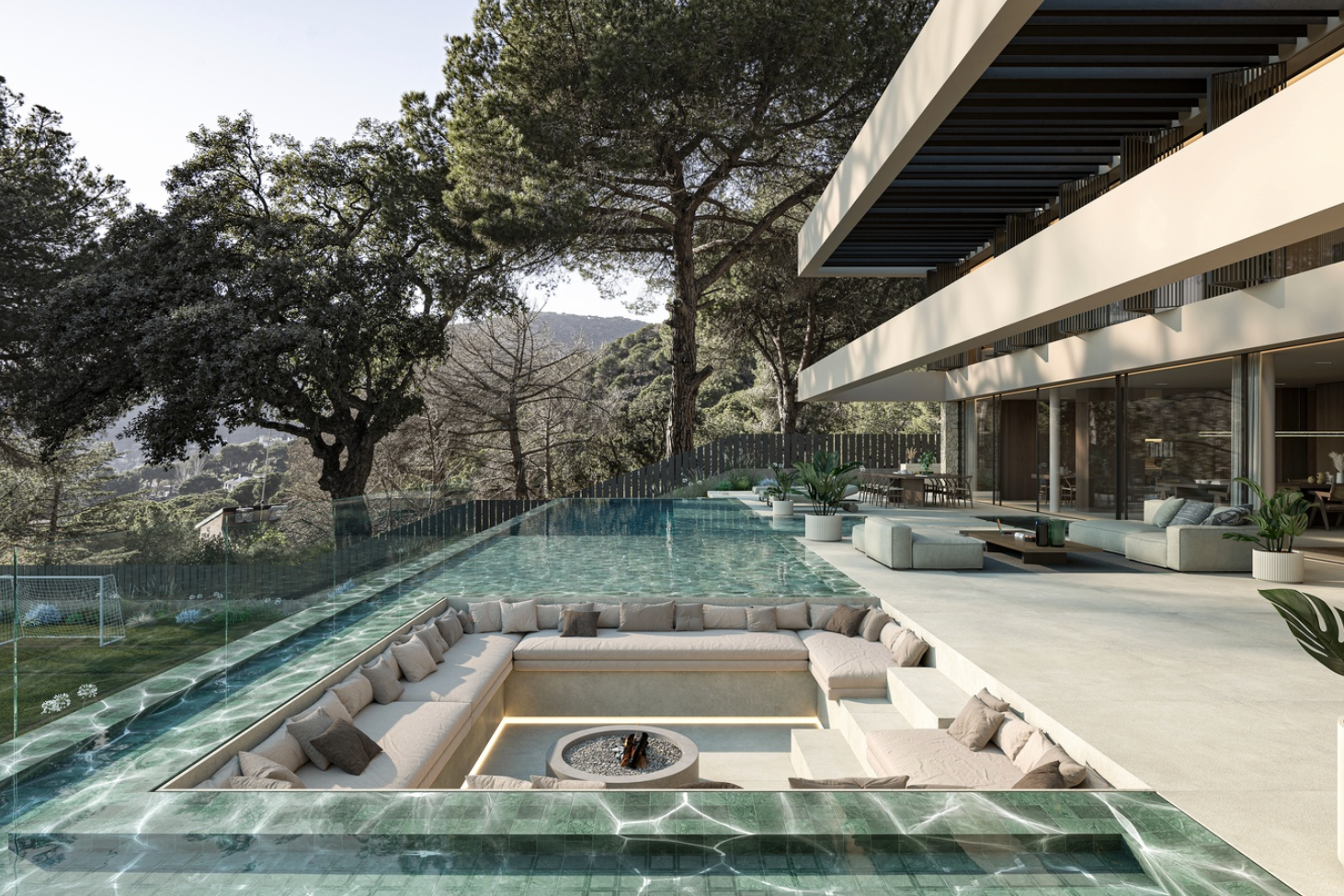
The authoritative reference for international buyers navigating Europe’s most architecturally extraordinary ultra-premium property market
Last updated: February 2026
Why Barcelona Occupies a Category of Its Own in European Luxury Real Estate
No city in Europe presents the combination that Barcelona delivers to the sophisticated international buyer. It is simultaneously a global cultural capital, a Mediterranean coastal city, the economic engine of southern Europe’s most dynamic region, and the setting for the world’s most extraordinary concentration of modernist architecture — a built environment so singular that UNESCO has granted World Heritage status to multiple works within a single urban grid. For buyers at the €3 million threshold and above, Barcelona offers a proposition that neither Mallorca nor Marbella can approximate: the full depth of a major European city, delivered with Mediterranean climate, cultural intensity, and architectural heritage that no competitor possesses.
The city’s luxury residential market has undergone a fundamental transformation over the past decade. Where international buyers once approached Barcelona primarily as a cultural destination with incidental investment merit, the market now attracts Europe’s most sophisticated buyers for reasons that are entirely residential: quality of life at a standard that rivals London, Paris, and Zurich at price points those cities abandoned a generation ago, combined with a lifestyle dimension — climate, gastronomy, architecture, connectivity — that northern European capitals structurally cannot offer.
Understanding luxury real estate in Barcelona requires recognizing what makes this market categorically different from other Spanish luxury destinations. Barcelona is not a resort market with luxury positioning. It is a genuine metropolitan capital — headquarters of global corporations, home to some of Europe’s finest universities, seat of Catalonia’s autonomous government — where luxury residential real estate operates within the full complexity and depth of a major urban economy. The implications for investment fundamentals, lifestyle delivery, and long-term value are significant, and they distinguish Barcelona sharply from seasonal or lifestyle-driven alternatives.
The Market in Numbers: What Luxury Real Estate in Barcelona Actually Looks Like
Barcelona’s luxury residential market above €3 million concentrates in a defined geographic arc that runs from Pedralbes and Sarrià-Sant Gervasi in the northwest through the Eixample’s Quadrat d’Or to the waterfront towers of Diagonal Mar. Within this arc, properties vary dramatically in character — from Belle Époque palaces on Passeig de Gràcia to contemporary architectural villas in Pedralbes — but share the common characteristic of genuine premium positioning within Europe’s most architecturally distinguished urban environment.
The €3–6 million segment represents Barcelona’s broadest and most active luxury tier. At this level, buyers access penthouse apartments with private terraces and city views in the Eixample’s finest modernist buildings, renovated historic apartments in Sant Gervasi, and contemporary villas in the elevated residential neighborhoods above the city. This segment has deepened considerably as international buyer interest has intensified and Barcelona’s global profile has continued to strengthen.
The €6–15 million segment concentrates in Pedralbes — Barcelona’s most exclusive residential address — and in the exceptional penthouse and duplex stock of the Quadrat d’Or’s finest buildings. Properties here represent a combination of scale, specification, and location that is genuinely scarce within the European urban luxury market. Barcelona’s architectural heritage means that the finest apartments in its best buildings are irreplaceable — renovated with contemporary specification within structures of extraordinary historical and aesthetic significance.
Above €15 million, Barcelona’s market is thin but active. Trophy properties — complete floors in landmark Eixample buildings, exceptional Pedralbes villas with extensive grounds, and the finest contemporary constructions in the elevated residential zones — represent acquisitions for which price is determined by irreplaceability rather than market comparison. These properties move through established networks with complete discretion, often without any public listing at any stage of the transaction.
The Prime Locations: A Definitive Geography of Barcelona’s Luxury Market
Pedralbes: Barcelona’s Most Prestigious Residential Address
Pedralbes occupies a position in Barcelona’s luxury hierarchy that has remained consistent for a century. Situated on the elevated slopes northwest of the city center, this aristocratic residential neighborhood combines the privacy and scale of estate living with immediate access to Barcelona’s full urban infrastructure — a combination that no other neighborhood in the city delivers with equivalent consistency.
The area’s architecture reflects its origins as Barcelona’s patrician residential district: Catalan modernist villas, rationalist estates from the mid-twentieth century, and contemporary constructions on generous plots coexist within a neighborhood that has maintained its residential character and social exclusivity through the full arc of the city’s modern development. Mature gardens, private security infrastructure, and streets that see minimal through traffic create a residential environment that buyers arriving from London’s Kensington or Paris’s 16th arrondissement recognize immediately.
Properties in Pedralbes range from €3.5 million for substantial renovated villas to €20 million and beyond for landmark estates with complete private infrastructure — pools, tennis courts, staff accommodation, and mature landscaping that represents decades of horticultural investment. The area’s strict planning controls have limited new development consistently, meaning that genuinely exceptional Pedralbes properties are finite in number. When they become available, they attract competitive interest from the most qualified segment of Barcelona’s international buyer pool.
Sarrià-Sant Gervasi: Authentic Urban Luxury
Adjacent to Pedralbes but distinct in character, Sarrià-Sant Gervasi offers a more village-like luxury residential experience — narrow streets, local commerce, neighbourhood identity — within the same elevated position above the city and with the same access to Barcelona’s metropolitan infrastructure. The neighbourhood’s charm lies precisely in this combination: the feeling of a small Catalan town preserved within Europe’s most architecturally intense city.
Properties in Sarrià-Sant Gervasi range from renovated traditional townhouses and compact villas to substantial apartments in the area’s finest residential buildings. The price range — €2.5 million to €8 million for the most exceptional offerings — reflects the neighbourhood’s slightly more accessible positioning relative to Pedralbes while delivering comparable lifestyle quality and superior authenticity of character. Buyers who have spent extended time in Barcelona consistently identify Sarrià as their preferred residential destination once they understand the city’s geography in depth.
Quadrat d’Or and Passeig de Gràcia: Architectural Magnificence as Residential Address
The Quadrat d’Or — the “Golden Square” at the heart of Ildefons Cerdà’s famous Eixample grid — represents something genuinely unique in global luxury real estate: the opportunity to live within the world’s most extraordinary collection of modernist architecture, in buildings designed by Gaudí, Domènech i Montaner, and Puig i Cadafalch that are simultaneously UNESCO World Heritage sites and functioning residential properties.
Penthouse apartments and complete floors in the Quadrat d’Or’s finest buildings represent Barcelona’s most distinctive luxury proposition — properties that cannot be replicated anywhere in the world because the architectural context that gives them their significance is irreproducible. A duplex penthouse with terraces overlooking the Eixample’s interior gardens, in a building of genuine architectural importance, represents a cultural and lifestyle experience as much as a real estate acquisition.
Premium properties in the Quadrat d’Or and Passeig de Gràcia typically range from €3 million for exceptional renovated apartments on upper floors to €15 million and above for the finest penthouse offerings with private rooftop terraces. The investment case rests partly on scarcity — there are a finite number of apartments of this character in the world — and partly on Barcelona’s continued maturation as a global residential destination for the most sophisticated international buyers.
Diagonal Mar and the Waterfront: Contemporary Urban Luxury
Barcelona’s waterfront — transformed from industrial infrastructure to luxury residential and hotel territory over the past three decades — offers a fundamentally different luxury proposition: contemporary architecture, sea views, marina access, and the immediate juxtaposition of urban intensity and Mediterranean openness that defines Barcelona’s coastal character.
The most prestigious waterfront residences — tower apartments in Diagonal Mar, contemporary developments overlooking the Port Olímpic, and the finest addresses in the emerging 22@ district — attract buyers seeking architectural modernity and coastal orientation within a fully operational major city. Properties here typically range from €2.5 million for exceptional high-floor apartments to €8 million for the most commanding penthouse positions with unobstructed Mediterranean views.
The waterfront’s continued development as a luxury residential destination — driven by sustained international demand and the area’s proximity to Barcelona’s tech and business ecosystem — supports long-term appreciation for premium positions acquired today.
Sitges: The Coastal Alternative for Discerning Buyers
For buyers whose priorities include coastal living, private outdoor space, and a more intimate community character alongside proximity to Barcelona’s metropolitan infrastructure, Sitges represents a compelling extension of the Barcelona luxury market. Located 35 kilometres southwest of Barcelona along the Costa Garraf — accessible in 30 minutes by train or 40 minutes by car — Sitges has evolved from a celebrated artistic and bohemian coastal town into one of Catalonia’s most desirable luxury residential addresses.
Sitges offers what Barcelona itself structurally cannot: private villas with gardens, sea views from elevated positions above the town, and a year-round community of sophisticated international residents who have consciously chosen quality of life over metropolitan proximity. The town’s architectural heritage — elegant modernist villas, whitewashed historic streets, a seafront promenade of genuine character — creates a residential environment with authenticity that purpose-built resort developments never achieve.
Properties in Sitges’s premium positions — elevated villas with panoramic sea views, historic centre renovations, and contemporary constructions in the finest residential developments — range from €2 million to €8 million, offering meaningful value relative to comparable coastal positions in Mallorca or Marbella for buyers who prioritise Barcelona connectivity alongside coastal lifestyle. For Black Privé’s international buyer pool evaluating luxury property in Catalonia, Sitges properties represent an increasingly compelling alternative to urban Barcelona acquisitions — particularly for buyers with families or those seeking primary rather than secondary residence.
What Drives Barcelona’s Luxury Property Market: The Structural Case
The Scarcity of Genuinely Irreplaceable Architecture
Barcelona’s luxury market rests on a foundation that no other European city can replicate: the scarcity of apartments and properties within buildings of genuine architectural significance. The Eixample’s finest modernist buildings are finite. The Pedralbes villas from the early twentieth century are finite. The renovated Gothic and Modernista properties in the historic centre are finite. When exceptional properties in these contexts become available, there is no alternative — the building, the address, and the architectural context are unique in the world.
This irreplaceability argument is distinct from the supply constraint arguments applicable to coastal luxury markets. In Mallorca or Marbella, supply is constrained by regulation and geography. In Barcelona’s finest addresses, supply is constrained by the fundamental impossibility of creating new examples of what already exists. A penthouse in a Domènech i Montaner building on Passeig de Gràcia cannot be replicated — its significance derives from the building’s history, the architect’s legacy, and the urban context that the Cerdà grid provides. These characteristics are permanent rather than regulatory.
Metropolitan Economic Depth as Investment Foundation
Barcelona’s investment case for luxury real estate extends well beyond lifestyle quality. The city is the headquarters of major global corporations in automotive, fashion, pharmaceuticals, and technology. The Mobile World Congress — the world’s largest mobile industry event — has anchored Barcelona as a permanent fixture in the global technology calendar. The city’s universities attract international academic talent at the highest level. This economic depth creates a permanent, self-renewing demand base for luxury residential real estate that purely lifestyle-driven markets cannot match.
The growing concentration of Europe’s technology sector in Barcelona — driven by talent quality, quality of life, and cost advantages relative to London, Amsterdam, or Stockholm — has introduced a new buyer profile to the luxury market: internationally mobile tech entrepreneurs and executives in their 30s and 40s who bring significant capital alongside lifestyle priorities that Barcelona addresses exceptionally well. This demographic shift has deepened demand in the €3–8 million segment considerably over the past five years.
Connectivity That Defines the Case for Primary Residency
Barcelona El Prat airport — Spain’s second busiest and one of Europe’s most connected international hubs — provides direct connections to every major global city. London is two hours. Paris is ninety minutes. Frankfurt, Zurich, and Amsterdam are all under two hours. New York, Dubai, and Singapore are served directly. For buyers evaluating whether Barcelona is viable as a primary residence rather than a secondary home, this connectivity removes the principal practical objection that comparable Mediterranean lifestyle destinations face.
The city’s domestic connectivity — high-speed rail to Madrid in two and a half hours, to Paris in six, and to the French high-speed network — extends this accessibility to the European continent’s core. Buyers who maintain active professional engagement across multiple European capitals consistently find that Barcelona’s connectivity eliminates the practical friction they anticipated.
Barcelona vs Mallorca vs Marbella: Understanding the European Luxury Comparison
The comparison that sophisticated buyers increasingly make is between Barcelona, Mallorca, and Marbella — the three Spanish luxury residential markets that operate at genuinely elite international standards. Each serves meaningfully different buyer priorities rather than existing in a hierarchy.
Barcelona delivers what neither island nor coastal resort destination can: the full depth and richness of major metropolitan life — culture, gastronomy, business infrastructure, academic excellence, architectural heritage — alongside a Mediterranean climate and lifestyle quality that northern European cities structurally cannot provide. Buyers who require the stimulation and infrastructure of genuine urban living, combined with European Mediterranean quality of life, find Barcelona’s proposition difficult to surpass anywhere on the continent.
Mallorca offers island exclusivity, dramatic natural landscape, and the psychological and practical separation that genuine geographic isolation provides. Its luxury market operates at comparable price levels to Barcelona’s finest addresses but delivers a fundamentally different lifestyle — quieter, more private, more naturally oriented — that appeals to buyers whose priorities have shifted away from urban intensity.
Marbella provides the Costa del Sol’s most mature luxury ecosystem, with a six-decade heritage of ultra-premium residential development, exceptional golf infrastructure, and a social calendar that remains among Europe’s most active from spring through autumn. Its lifestyle proposition is more overtly social and more explicitly leisure-oriented than Barcelona’s, serving buyers for whom the luxury lifestyle’s experiential dimensions take precedence over cultural and intellectual engagement.
A growing number of sophisticated buyers maintain positions across two or all three of these markets — recognising them as complementary expressions of European luxury living rather than competitive alternatives. Black Privé’s presence across all three destinations serves precisely this buyer profile.
The Off-Market Reality in Barcelona
Barcelona’s most exceptional properties — the finest Pedralbes estates, landmark Quadrat d’Or penthouses, exceptional Sarrià villas — rarely appear on public portals. The sellers of genuinely significant Barcelona properties prefer controlled transactions: a qualified buyer pool drawn from established networks, complete professional discretion, and the assurance that their property’s availability does not reach a general audience.
For buyers relying on public platforms, the consequence is systematic exclusion from the market’s most compelling opportunities. The finest Barcelona properties are acquired by buyers with access to the right advisory networks — not by those conducting the most thorough portal searches.
Black Privé presents Barcelona’s most exceptional available properties above €3 million to a curated international audience of qualified buyers, through a selection process that eliminates the volume-driven noise of mass-market platforms. The platform’s maximum of ten properties per partner agency is a quality standard, not a technical limitation — ensuring that every listing represents something a sophisticated buyer would seriously consider.
The Investment Dimension
Barcelona’s prime real estate has demonstrated consistent long-term appreciation across the economic cycles that have tested Spanish property markets since 2008. The city’s recovery from the post-2008 correction was faster and more complete than any other Spanish market, driven by international demand that proved resilient to domestic economic conditions. Properties in Pedralbes, the Quadrat d’Or, and the finest Sarrià addresses have outperformed broader Barcelona market indices consistently, reflecting the irreplaceability premium that genuinely scarce architectural assets command.
Catalonia applies its own transfer tax scale for property acquisitions, currently 10 percent for residential properties — consistent with other Spanish regions at this price level. Total acquisition costs including notary, registration, and legal fees run approximately 12–13 percent of purchase price, predictable and consistent across transaction types.
The rental market for luxury Barcelona properties operates under Catalonia’s specific rental regulations, which are among Spain’s most restrictive — a factor that most buyers at the €3 million threshold consider carefully. The regulatory environment favours owner-occupation over investment rental strategies at the luxury level, though exceptional properties with appropriate permits continue to generate meaningful yields in the city’s established luxury tourist rental segment.
Frequently Asked Questions: Luxury Real Estate in Barcelona
Which Barcelona neighbourhood best suits internationally mobile professionals? The Quadrat d’Or and Eixample deliver the clearest answer for buyers who value urban intensity, architectural significance, and walkable access to Barcelona’s full cultural and gastronomic offer. Pedralbes suits buyers who prioritise privacy and residential scale over urban proximity. Sarrià-Sant Gervasi resolves both priorities for buyers willing to accept a short commute to the city’s core.
How do property prices compare between Barcelona’s prime neighbourhoods? Pedralbes commands the city’s highest prices for villa-format properties, typically €4–20 million for the finest estates. The Quadrat d’Or’s most significant penthouses and complete floors range from €5–15 million for genuinely exceptional offerings. Sarrià and Sant Gervasi provide comparable lifestyle quality at 15–25 percent lower price points. Diagonal Mar and the waterfront offer competitive pricing for contemporary stock with sea views.
How does Barcelona compare to Mallorca and Marbella as a luxury real estate investment? Barcelona’s investment case is underpinned by metropolitan economic depth that coastal and island markets cannot match. The irreplaceability of its finest architectural stock creates a scarcity premium that is structural rather than regulatory. Mallorca and Marbella offer stronger lifestyle-driven demand and, in their finest enclaves, comparable appreciation profiles — but within markets that are fundamentally leisure-driven rather than economically diversified. Buyers seeking investment resilience across economic cycles typically find Barcelona’s foundations the most durable.
What makes Sitges an alternative worth considering for Barcelona area buyers? Sitges delivers coastal living, private outdoor space, and a sophisticated year-round community within 35 kilometres of Barcelona. For buyers whose priorities include a garden, sea views, and a more intimate residential scale — things that central Barcelona structurally cannot offer — Sitges represents exceptional value within the broader Barcelona luxury market. The commute to central Barcelona by train takes 30 minutes, preserving metropolitan connectivity alongside coastal lifestyle quality.
What infrastructure differences most affect daily living in Barcelona? Barcelona’s metropolitan infrastructure — healthcare, education, transport, connectivity — operates at standards that residents arriving from any major European capital find comparable. The international school sector has deepened significantly, with British, French, German, and American curriculum options established across the city’s premium residential zones. Private healthcare operates at European standards across multiple facilities. Broadband and mobile connectivity are among Europe’s finest.
Which Barcelona location offers the strongest long-term investment returns? Properties in genuinely irreplaceable contexts — the finest Quadrat d’Or penthouses, exceptional Pedralbes estates, landmark Sarrià villas — have demonstrated the most consistent appreciation, driven by the permanent impossibility of creating new examples of what they represent. Within the broader market, waterfront and tech district adjacent properties have shown strong recent appreciation as the city’s economic composition has shifted toward higher-value sectors.
How do buyer demographics differ across Barcelona’s prime areas? French buyers show the strongest concentration in the Eixample and Quadrat d’Or, reflecting cultural and linguistic affinity alongside proximity to France. British buyers distribute across premium neighbourhoods but show particular affinity for Pedralbes and Sarrià’s village character. German and Swiss buyers concentrate in Pedralbes for its privacy and residential scale. American and Latin American buyers — a growing cohort — favour the Eixample’s architectural significance and urban accessibility. Technology sector buyers, increasingly international in origin, have established a growing presence across all prime neighbourhoods.
What rental regulations affect luxury Barcelona properties? Catalonia’s rental regulation framework is among Spain’s most interventionist, with rent controls applicable to long-term residential rentals and significant regulatory complexity around tourist rental licensing in central areas. Buyers acquiring Barcelona properties with investment rental strategies should engage specialist legal advice familiar with Catalonia’s specific regulatory environment. At the €3 million threshold and above, most buyers approach rental income as secondary — the capital appreciation and primary residence value case dominates the acquisition rationale.
What planning constraints affect luxury renovations in Barcelona? The Eixample’s protected building stock — virtually every significant building in the Quadrat d’Or carries some form of heritage designation — imposes planning constraints on renovations that require specialist architectural and planning guidance. Façade modifications, structural alterations, and changes to historic interior elements require permits that can extend renovation timelines significantly. Buyers with renovation ambitions should engage architects with specific experience in Barcelona’s protected building environment before finalising acquisition decisions.
What is Barcelona’s long-term value proposition for HNWI buyers? Barcelona’s structural fundamentals — irreplaceable architectural stock, deepening international economic presence, accelerating climate migration from northern Europe, and a quality of life that major northern capitals cannot replicate — create a long-term residential and investment proposition that is among the most durable available in European luxury real estate. The city’s continued maturation as a global destination for mobile international talent and capital supports sustained demand growth in the premium segments where scarcity is genuine and permanent.
For exclusive access to Barcelona’s most exceptional luxury properties and comprehensive market insight, contact our specialized advisory team at barcelona@blackprive.com.
Prepared by the Black Privé editorial team. Black Privé is Europe’s exclusive luxury real estate platform for properties above €3M, present in Barcelona, Mallorca, Marbella, and across the continent’s finest markets.