
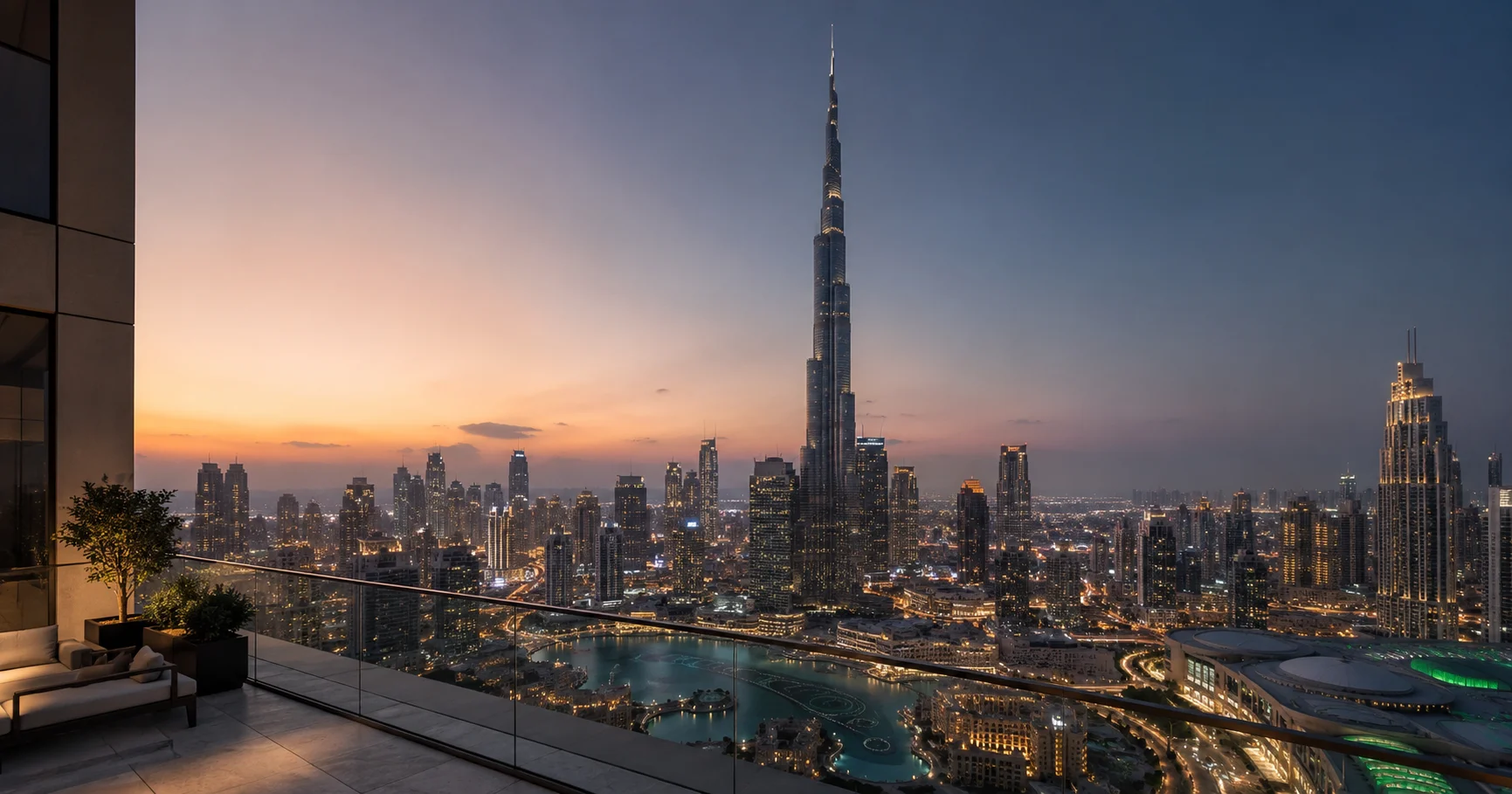
Downtown Dubai is the Burj Khalifa address, the city’s most recognised urban-prime market, and it is bought for liquidity and rentability as much as for the view. One thing a careful buyer should know: unlike Palm Jumeirah, Downtown is not named in the founding 2006 freehold law, so its freehold status rests on a later designation. That is easily confirmed, and it changes nothing about buying there, but it is the kind of detail worth getting right. This guide sets out what Downtown is, how to verify its footing, and who it suits.
The urban-prime core
Rentable, tradeable
Check the DLD map
Apartment-led
Last updated: July 2026
By: Alexander Thornbury
What is Downtown Dubai?
Downtown Dubai is the master-planned district built around the Burj Khalifa and the Dubai Mall, and it is the city’s flagship urban-prime market. It is apartment-led, heavy on branded residences, and defined by the Burj address and the central location. Where Palm Jumeirah is waterfront and Emirates Hills is a gated golf enclave, Downtown is the vertical, walkable, city-centre option.
It appeals to a buyer who wants a recognised central address with strong rentability and resale liquidity, rather than a private villa or a beachfront home. For how it sits within the wider market, see our international buyer’s guide to Dubai property.
The freehold point to check
Here is the detail careful buyers should know. Downtown Dubai is not named in Regulation No. 3 of 2006, the founding law that first allowed non-UAE nationals to own freehold. Downtown is transacted as freehold every day and foreign buyers own there without difficulty, but its status rests on a later designation recorded on the Dubai Land Department’s current map, not on the 2006 text.
In practice this changes nothing about buying there, but it sets the rule for verification: confirm the community on the DLD designated-areas map and read the title deed, rather than relying on a brochure calling the project freehold. Our guide to Dubai’s freehold zones explains why the founding law and the current map are different authorities.
| Downtown Dubai | Detail |
|---|---|
| Freehold basis | Later designation on the DLD map (not the 2006 law) |
| Product | Branded apartments and penthouses, apartment-led |
| Bought for | Central address, liquidity, rentability |
Why buyers choose it: liquidity
Downtown’s defining commercial quality is liquidity. Because it is apartment-led, centrally located and globally recognised, it is one of the more rentable and tradeable prime markets in the city. For a buyer who wants a prime Dubai asset they can let easily or sell on without the thinness of an ultra-niche market, Downtown is the natural choice.
That said, letting a property in Dubai can carry tax consequences depending on how it is held: personal, unlicensed letting sits outside the corporate tax base, while company-held or licensed short-let property can fall inside it. A buyer intending to rent should understand that distinction, covered in our buyer’s guide, before choosing a structure.
What you actually buy there
Downtown is a market of apartments and penthouses, many in branded and hotel-serviced buildings, so what you are buying is a managed, amenity-led residence in a tower rather than a private home on its own plot. Quality, view, floor and building brand drive value, and the service charge, set per building, can be material in the premium towers.
Pricing is building- and view-specific and moves with the market, so treat any single per-square-foot figure as indicative and confirm current values for the specific unit at purchase. As with any prime Dubai home, budget the building’s service charge, checked on the DLD Service Charge Index, and the 5% municipality housing fee, both covered in our service charges guide.
| Downtown Dubai | Palm Jumeirah | |
|---|---|---|
| Setting | Central, vertical, walkable | Waterfront island |
| Strength | Liquidity and rentability | Trophy recognition |
| Freehold basis | Later DLD designation | Named in 2006 law |
Who Downtown suits
Downtown suits the buyer who wants a recognised central address, strong liquidity and easy rentability, and who is comfortable with an apartment in a managed tower rather than a private home. It is less suited to a buyer seeking waterfront, a private plot, or a quiet gated setting, for whom the Palm or Emirates Hills fits better.
For an international buyer wanting a prime Dubai base that is easy to use, let and eventually sell, Downtown is often the most practical choice, precisely because its liquidity is its defining feature. Verify the freehold designation and the building’s service charge, and it is one of the safest urban-prime bets in the city.
Key takeaways
- Downtown Dubai is the Burj Khalifa address, the city’s flagship apartment-led urban-prime market.
- It is not named in the 2006 freehold law; its status rests on a later DLD designation. Confirm it on the map and the deed.
- Its defining strength is liquidity and rentability, which makes it easy to let and sell.
- Letting can carry corporate-tax consequences depending on how the property is held; take advice on the structure.
- Budget the per-building service charge and the 5% housing fee as ongoing costs.
Frequently asked questions
Can foreigners buy freehold in Downtown Dubai?
Yes. Foreign buyers own freehold in Downtown, but it is not named in the 2006 freehold law; its status rests on a later designation recorded on the Dubai Land Department’s map. Confirm the community on the map and read the title deed.
What kind of property is in Downtown Dubai?
Apartments and penthouses, many in branded and hotel-serviced buildings around the Burj Khalifa and Dubai Mall. It is an apartment-led, managed-tower market rather than private villas.
Why do buyers choose Downtown Dubai?
For its liquidity and rentability. Because it is central, apartment-led and globally recognised, it is one of the easier prime markets to let and sell, which suits a buyer who values a tradeable asset.
Is there tax on renting out a Downtown apartment?
Personal, unlicensed letting sits outside the corporate tax base, but company-held or licensed short-let property can fall inside the 9% corporate tax. A buyer intending to rent should take advice on how to hold the property.
What annual costs come with a Downtown home?
The building’s service charge, which can be material in premium towers and should be checked on the DLD Service Charge Index, plus the 5% municipality housing fee on assessed rental value for expatriate owners, and insurance.
Who is Downtown Dubai best for?
A buyer who wants a recognised central address with strong liquidity and easy rentability, and who is comfortable with an apartment in a managed tower rather than a private plot or waterfront home.
Does a Downtown apartment qualify for a Golden Visa?
Yes, where the property is worth AED 2 million or more, which most prime Downtown apartments are. Qualifying property grants a 10-year renewable Golden Visa. It is residency, not citizenship; no property purchase leads to an Emirati passport.
What are the annual costs of owning in Downtown Dubai?
The tower’s service charge, which is set per building and can be checked on the Dubai Land Department Service Charge Index, plus the 5% municipality housing fee on assessed rental value billed through the utility account for expatriate owners, plus insurance. Central towers with full amenities carry higher service charges.
How long does a Downtown purchase take?
A cash resale typically completes in about 30 days, transferring at a Dubai Land Department trustee centre once the seller’s no-objection certificate is issued. An off-plan purchase follows the developer’s payment plan through to handover instead, so the timeline tracks the construction schedule.
Sources
- Dubai Land Department – designated areas map, Service Charge Index
- Dubai Legislation portal – Regulation No. 3 of 2006 (Downtown not named; later designation applies)
Figures current at July 2026. Freehold status, service charges and pricing for a specific property should be confirmed with the Dubai Land Department and a UAE-qualified lawyer before purchase.

About the author
Alexander Thornbury is a published author who writes on international property, tax and residency for high-net-worth buyers across Europe, the Gulf and North America. His work focuses on the practical mechanics of cross-border purchase: what a buyer actually pays, owes and signs. More at alexanderthornbury.com.