
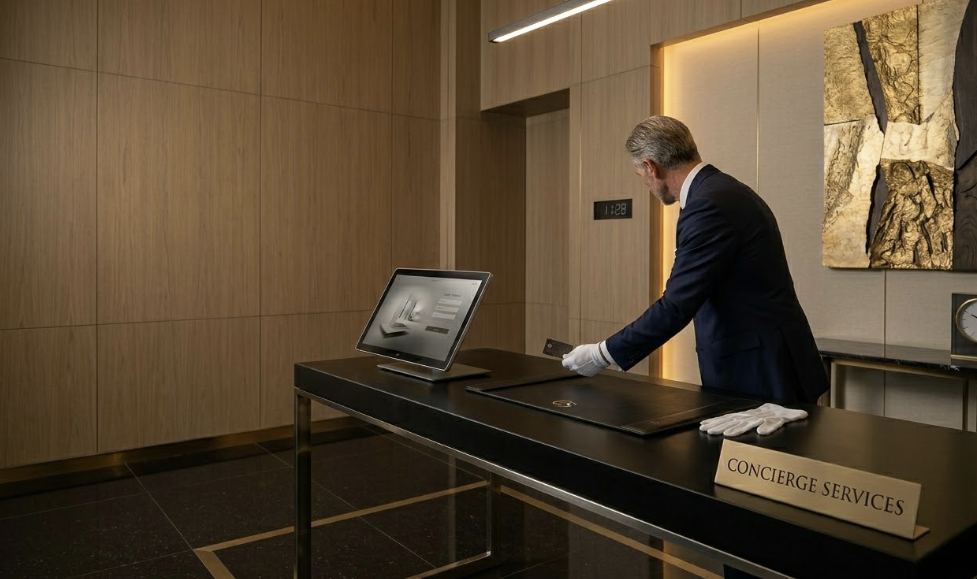
Monaco residency isn’t bought. It’s applied for, reviewed, and granted at the discretion of the principality’s authorities. That distinction matters. There’s no “golden visa” programme, no published price list, no automatic approval based on investment size. You apply to the Direction de la Surete Publique, demonstrate genuine intent to reside, show financial self-sufficiency, and wait. Most applications for financially qualified UHNWI candidates are processed within 4-8 weeks. But Monaco reserves the right to say no, and occasionally does.
Typical processing time
Indicative bank deposit
For non-French residents
Official sources cited
Last updated: 10th June 2026
By: Alexander Thornbury
In this guide:
- What are the actual requirements for Monaco residency?
- How much do you need in the bank?
- What’s the step-by-step application process?
- What documents do you need?
- What types of residence cards exist?
- How long does the whole process take?
- Do you need property before applying?
- How does Monaco compare to Andorra and Swiss residency routes?
- Key takeaways
- FAQ
What are the actual requirements for Monaco residency?
Monaco’s residency system is administered by the Direction de la Surete Publique (Department of Public Safety). The official requirements are deliberately non-prescriptive – there’s no published minimum investment or bank balance written into statute. But in practice, the authorities expect applicants to demonstrate three things clearly.
1. Accommodation in Monaco. You need to show that you have a property in Monaco, either owned or rented. This must be a genuine residence, not a mailbox. A lease agreement or purchase completion certificate is required. The property needs to be of sufficient size and quality to constitute a genuine home.
2. Financial self-sufficiency. You must prove that you can support yourself and any dependents without recourse to Monaco’s social services. This is demonstrated through a bank account opened with a Monaco-licenced bank, containing funds that satisfy the bank and the authorities that you won’t be a financial burden. The commonly cited guideline is a minimum deposit of EUR 500,000, though this isn’t a published statutory requirement and banks may expect more depending on your situation.
3. Clean criminal record. An extract from your country of origin’s criminal records, typically translated into French by a sworn translator and apostilled. Monaco won’t grant residency to applicants with serious criminal histories.
That’s it. No language test. No citizenship pathway requirement. No minimum investment in local businesses. No points system. The simplicity is deliberate – Monaco wants wealthy, law-abiding residents who contribute to the economy through spending, not through jumping bureaucratic hurdles.
How much do you need in the bank?
This is the question everyone asks first, and the honest answer is: it depends.
The commonly cited figure is EUR 500,000 as a minimum deposit in a Monaco bank. But this is a market convention, not a published legal requirement. In practice:
- Some Monaco banks will accept deposits of EUR 500,000 for single applicants
- Others expect EUR 1 million or more, depending on the applicant’s profile and the bank’s internal policies
- Families with dependents may be expected to deposit more
- High-profile applicants or those with complex wealth structures may face additional due diligence and higher requirements
The deposit isn’t a “fee” paid to the government. It’s your money, sitting in your account, at a bank you’ve chosen. You retain full ownership and can invest or manage it through the bank’s wealth management services. The bank provides a confirmation letter (attestation bancaire) to the authorities as part of the residency application.
What’s the step-by-step application process?
| Step | Action | Typical timeline | Notes |
|---|---|---|---|
| 1 | Secure accommodation (purchase or rental) | 2-12 weeks | Property purchase takes longer. Rental can be faster. Must be a genuine residence |
| 2 | Open Monaco bank account and deposit funds | 2-6 weeks | In-person meeting required. KYC/AML due diligence applies. Bank issues attestation |
| 3 | Gather required documents | 2-4 weeks | Criminal record extract, birth/marriage certificates, passport copies. All translated into French and apostilled |
| 4 | Submit application to Direction de la Surete Publique | 1 day | In-person submission at the Surete Publique offices, 3 rue Louis Notari, Monaco |
| 5 | Background checks and review | 4-8 weeks | Police and security checks conducted. Additional documents may be requested |
| 6 | Residence card issued | Upon approval | Initial card typically valid for 1 year (carte de sejour temporaire). Renewable |
Total timeline from first steps to card in hand: typically 3-6 months. Faster if you’re renting (property secured quickly) and your banking/document preparation is already underway. Slower if you’re purchasing property (which adds notary timelines) or if your financial structure triggers extended due diligence.
What documents do you need?
The document list for a standard application. All foreign-language documents must be translated into French by a certified/sworn translator and apostilled where required.
- Valid passport (plus copies)
- Criminal record extract from your country of origin (less than 3 months old)
- Birth certificate
- Marriage certificate (if applicable)
- Proof of accommodation in Monaco (lease agreement or property deed)
- Bank attestation letter confirming account opening and sufficient funds
- Passport-style photographs
- Proof of health insurance valid in Monaco (or willingness to join CCSS upon approval)
- CV or professional history (in some cases)
For families, each dependent needs their own supporting documentation. Children require birth certificates linking them to the primary applicant. Spouses need marriage certificates.
What types of residence cards exist?
Monaco issues several categories of residence cards. The pathway typically progresses from temporary to long-term.
| Card type | Validity | Requirements |
|---|---|---|
| Carte de sejour temporaire | 1 year, renewable | Initial card for new residents. Standard application. First 3 renewals typically annual |
| Carte de sejour ordinaire | 3 years | After 3 consecutive years of temporary residency. Demonstrates sustained commitment |
| Carte de resident privilegie | 10 years | After 10+ years of continuous residency. The “permanent” card in practice |
| Monegasque nationality | Permanent | Extremely rare for non-native residents. Granted by sovereign decision only. Not a standard pathway |
The progression is: 1 year > 1 year > 1 year > 3 years > 10 years. After the 10-year card, renewals are effectively automatic assuming continued residency and good standing. Full Monegasque nationality is exceptionally rare and is granted at the personal discretion of the Sovereign Prince – don’t plan for it.
Crucially, the tax benefits (zero income tax, zero capital gains, zero property tax) apply from day one of your temporary residency card. You don’t need to wait for the 3-year or 10-year card to benefit.
How long does the whole process take?
A realistic timeline for a well-prepared UHNWI applicant:
- Month 1-2: Property search and selection. Bank relationship established. Document preparation begins
- Month 2-3: Property secured (lease signed or purchase completed). Bank account open and funded. Documents gathered, translated, and apostilled
- Month 3: Application submitted to Direction de la Surete Publique
- Month 3-5: Review and background checks. Possible follow-up questions
- Month 5-6: Residence card issued. Registration with CCSS (social security) for healthcare. Registration with tax authorities (primarily a formality for most nationalities)
Total: approximately 5-6 months from decision to card in hand. Can be compressed to 3-4 months if you rent rather than buy and your banking and documents are prepared in parallel. Our guide to living in Monaco covers what daily life actually looks like once you’ve arrived.
Can it be slower? Yes. Complex financial structures, multiple citizenships, or any flags in the background check can extend the review. Applicants from certain jurisdictions may face enhanced due diligence. If your application requires additional documentation or clarification, the 4-8 week review period can stretch.
Do you need property before applying?
Yes. You need to demonstrate that you have accommodation in Monaco. But you don’t need to own it – a rental agreement is sufficient.
This creates a practical choice: rent first or buy immediately?
Rent first (recommended for most applicants): Signing a lease is faster than completing a property purchase. You can secure residency within months, then take your time finding the right property to buy. Most specialists recommend this approach. It reduces the pressure on the property search and lets you experience different districts before committing. Rents are high – a quality 3-bed averages EUR 142.30 per sqm per month (Savills) – but for an initial 6-12 month rental while you find the right purchase, it’s a worthwhile cost.
Buy immediately: If you’ve already identified the right property and the timeline works, buying before applying is perfectly fine. The district comparison guide covers where to look. Just be aware that property purchase in Monaco takes 2-4 months to complete (notary process, due diligence, funding), so factor this into your overall timeline.
How does Monaco compare to Andorra and Swiss residency routes?
| Factor | Monaco | Andorra | Switzerland (lump-sum) |
|---|---|---|---|
| Financial requirement | ~EUR 500,000+ bank deposit (guideline, not statute) | EUR 50,000 government bond + EUR 400,000 Andorran investment | Annual lump-sum tax minimum CHF 250,000-400,000+ (canton dependent) |
| Processing time | 4-8 weeks (application review) | 2-4 months | 3-6 months (canton negotiation) |
| Physical presence | Must be genuine primary residence. No published minimum days | Minimum 90 days per year | Must be primary residence. Typically 183+ days |
| Property requirement | Must have accommodation (own or rent) | Must have accommodation | Must have accommodation (canton dependent) |
| Nationality restrictions | French nationals face tax exception (1963 convention) | No nationality restrictions | Not available to Swiss nationals or Swiss work permit holders |
| Path to permanent status | 10-year card after 10 years continuous residency | Passive residency renewable indefinitely. Citizenship possible after 20+ years | Settlement permit (C permit) after 10 years. Citizenship after 12 years |
Sources: Direction de la Surete Publique (Monaco), Govern d’Andorra, Swiss State Secretariat for Migration (SEM). Requirements may change – verify current rules with qualified advisers.
Monaco is the most expensive to buy into (property at EUR 51,967/sqm average) but the least bureaucratically complex. Andorra has the lowest financial barrier (EUR 450,000 total). Switzerland’s lump-sum route is a negotiation, not a straightforward application, and the ongoing annual tax commitment is the trade-off for accessing Swiss infrastructure.
For the full tax and lifestyle comparison, see our dedicated Monaco vs Andorra vs Switzerland guide. For Spanish residency alternatives, see the Spain golden visa update.
Key takeaways
- Three core requirements – accommodation in Monaco (owned or rented), a bank account with sufficient funds (~EUR 500,000+ guideline), and a clean criminal record. No published minimum investment.
- Processing takes 4-8 weeks – for the application review itself. Total timeline from start to card in hand is typically 3-6 months including property and banking setup.
- Tax benefits apply from day one – zero income tax, zero capital gains, zero property tax from the moment your temporary residence card is issued. No waiting period.
- Rent first, buy later is the smart approach – secure residency quickly via a rental, then take time to find the right property to purchase.
- The bank relationship is central – choose a Monaco bank that fits your wealth management needs, not just the residency compliance. The attestation bancaire is a key application document.
- The French national exception is critical – French citizens don’t benefit from zero income tax. All other nationalities do. This shapes who actually applies.
Frequently asked questions
How much does Monaco residency cost?
There’s no government fee for residency itself. The costs are: property (rental deposit or purchase), bank deposit (~EUR 500,000+ as a guideline), legal and translation fees (EUR 2,000-5,000), and health insurance. Total out-of-pocket costs depend primarily on property choice – budget EUR 2-3 million minimum for a modest Monaco residence plus deposit.
What is the minimum bank deposit for Monaco residency?
The commonly cited guideline is EUR 500,000. This is not a published statutory requirement – it’s a market convention. Individual banks may require more depending on your profile. The deposit is your money, held in your account – it’s not a fee paid to the government.
How long does the Monaco residency application take?
The formal application review by the Direction de la Surete Publique typically takes 4-8 weeks. Total timeline from first steps (property search, bank setup, document preparation) to residence card in hand is usually 3-6 months. It can be faster if you rent rather than buy property.
Do I need to speak French to get Monaco residency?
No. There’s no language test or French-language requirement for residency. French is the official language and government business is conducted in French, but English is widely spoken in Monaco’s international business community. Your application documents need to be translated into French, but this is handled by sworn translators.
Can I rent instead of buying property in Monaco?
Yes. A rental agreement is sufficient to satisfy the accommodation requirement. Many applicants rent initially to secure residency quickly, then take their time finding the right property to purchase. This is the approach most specialists recommend.
Is there a minimum days requirement for Monaco residency?
No published minimum physical presence requirement exists. But Monaco expects genuine residency, not a paper arrangement. You must use Monaco as your primary residence, and the authorities have ways of verifying this. A complete absence from the principality for extended periods could jeopardise your residence card renewal.
Can French nationals get Monaco residency?
Yes, they can obtain residency. But French nationals who established Monaco residency after 1957 remain subject to French taxation on worldwide income under the 1963 bilateral convention. The zero-tax benefit doesn’t apply to them. See our Monaco tax guide for full details.
What happens after my first residence card expires?
You renew it. The initial carte de sejour temporaire is typically valid for 1 year. After 3 consecutive annual renewals, you may qualify for a 3-year carte de sejour ordinaire. After 10 years of continuous residency, you can apply for a 10-year carte de resident privilegie. Renewals are generally straightforward if you’ve maintained genuine residency.
Can my family get residency too?
Yes. Spouses and dependent children can be included in the residency application. Each family member needs their own documentation (passport, birth certificate, criminal record for adults). The financial self-sufficiency requirement may be adjusted upward for larger families.
Which banks are licensed in Monaco?
Monaco has approximately 30 licensed banks. These include international names (HSBC Private Banking, Barclays Wealth, UBS, Julius Baer, Edmond de Rothschild) and local institutions (CMB – Compagnie Monegasque de Banque, CFM – Credit Foncier de Monaco). The banking relationship involves wealth management, not just compliance – choose based on service quality and investment capability.
Can Monaco residency be refused?
Yes. Monaco reserves the right to refuse any application without providing detailed reasons. Refusals are uncommon for financially qualified applicants with clean backgrounds, but they happen. Criminal history, ongoing legal proceedings, or failure to demonstrate genuine intent to reside can all result in refusal. Having professional guidance through the process reduces this risk.
Is Monaco residency the same as Monaco citizenship?
No. Residency (carte de sejour) gives you the right to live in Monaco and access its tax regime. Citizenship (Monegasque nationality) is exceptionally rare and granted by sovereign decision of the Prince. Residency does not lead to citizenship as a standard pathway. Don’t confuse the two.
Sources
- Monaco Government Service Portal (monservicepublic.gouv.mc) – Residency requirements, application procedures, document lists, tax regime
- Monaco Government Official Portal (en.gouv.mc) – Official information on residing in Monaco, government services
- Govern d’Andorra – Andorran residency comparison data
- Knight Frank – Monaco Buying Guide – Property market context, purchase process
- Savills – Spotlight Monaco 2025 – Rental market data for property planning
For exclusive access to Monaco’s finest luxury properties and expert market insight, contact our concierge team at monaco@blackprive.com
Browse our full Monaco property collection at www.blackprive.com/monaco